
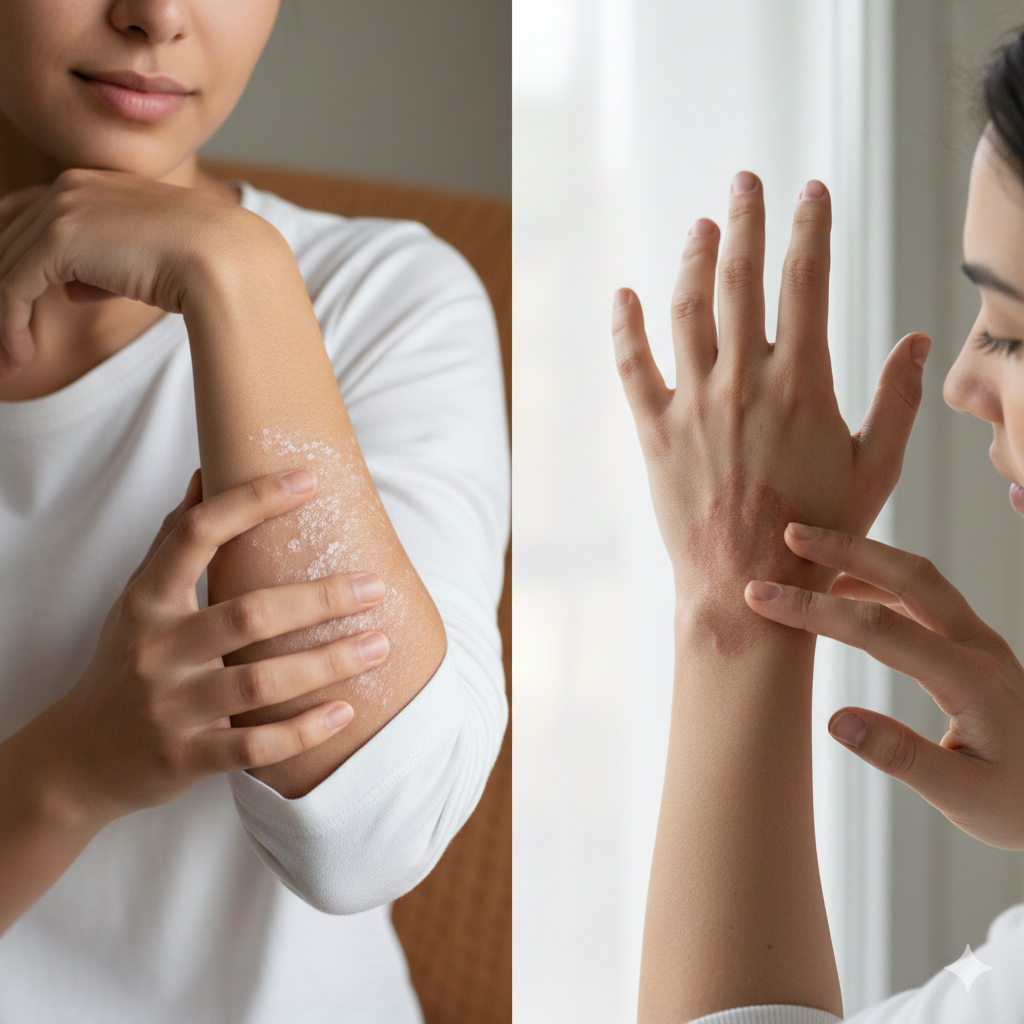
If you’ve ever had a red, itchy, angry patch of skin appear out of nowhere, you’ve probably found yourself spiraling through Google searches. Is it eczema? Contact dermatitis? Something worse? And why does the internet seem to use these terms interchangeably?
Here’s the thing that makes this confusing: All eczema is dermatitis, but not all dermatitis is eczema.
Dermatitis simply means “inflammation of the skin.” It’s an umbrella term covering dozens of skin conditions that cause redness, swelling, and irritation. Eczema is one specific type of dermatitis—specifically, atopic dermatitis, which is the chronic, often genetically linked form most people mean when they say “eczema.”
Dr. Jenna Queller, a board-certified dermatologist, puts it simply: “Dermatitis is the broad category; eczema is one of the main characters.”
But understanding the difference matters because treatment varies. What works for one type might make another worse.
Let’s break down the most common forms, what causes them, and how to actually manage the itch.
The Main Types: Understanding What You’re Dealing With
Atopic Dermatitis (The “Classic” Eczema)
This is what most people mean when they say eczema. It’s chronic, often starts in childhood, and tends to run in families. If you have asthma, hay fever, or allergies, you’re more likely to have atopic dermatitis.
What it looks like: Dry, scaly, intensely itchy patches that can appear anywhere but often show up in the creases of elbows and knees, on the neck, and on the face. In darker skin tones, it may appear darker brown, purple, or ashen rather than red.
What’s happening: Your skin barrier doesn’t function properly, allowing moisture to escape and irritants to penetrate more easily. Your immune system also tends to overreact to triggers, creating inflammation.
Common triggers: Stress, dry weather, harsh soaps, wool fabrics, dust mites, and certain foods in some people.
Contact Dermatitis (The “I Touched Something Bad” Reaction)
This is your skin’s direct reaction to something it touched. There are two types:
Irritant contact dermatitis happens when something damages your skin’s outer layer. Think harsh chemicals, excessive hand washing, or even frequent exposure to water. This is the most common form of occupational skin disease.
Allergic contact dermatitis is an immune reaction. Your skin touches something you’re allergic to (like nickel, poison ivy, or certain fragrances), and your immune system mounts a response.
What it looks like: Red, itchy, sometimes blistering rash exactly where the substance touched. Unlike atopic dermatitis, it’s usually confined to the contact area.
Common culprits: Poison ivy and oak, nickel in jewelry, fragrances in skincare products, preservatives in cosmetics, latex, and certain topical antibiotics like neomycin.
Seborrheic Dermatitis (The “Dandruff” Connection)
This one shows up where you have lots of oil glands—scalp, face, upper chest, and back.
What it looks like: Greasy, yellowish, scaly patches that may be red underneath. On the scalp, it’s dandruff. On the face, it often affects the eyebrows, sides of the nose, and behind the ears.
What’s happening: It’s linked to an overgrowth of yeast (Malassezia) that naturally lives on skin. Your immune system may overreact to it, creating inflammation. Stress, cold weather, and hormonal changes can trigger flare-ups.
Nummular Dermatitis (The “Coin-Shaped” Rash)
This form creates distinct round or oval spots that look like coins on the skin.
What it looks like: Coin-shaped lesions that may ooze and crust. They’re intensely itchy and most common on legs, arms, and torso.
Triggers: Often starts after skin injury (bug bite, burn, scratch) and is more common in dry skin. Winter weather, harsh soaps, and stress can trigger flares.
Stasis Dermatitis (The “Poor Circulation” Rash)
This happens when fluid builds up under the skin, usually in the lower legs, due to poor circulation.
What it looks like: Red, itchy, swollen skin around the ankles and lower legs. It may feel heavy or achy. Over time, the skin can become thick, discolored, and prone to ulcers.
Who gets it: People with varicose veins, heart conditions, or other issues affecting circulation. It’s most common in older adults.
What Actually Causes These Conditions?
The causes vary by type, but several factors play into the “why” behind dermatitis:
Genetics: For atopic dermatitis specifically, a mutation in the gene that produces filaggrin—a protein essential for healthy skin barrier—is common. Without enough filaggrin, skin loses moisture and allows allergens in.
Immune system dysfunction: Many forms involve an overactive immune response to otherwise harmless triggers.
Environmental triggers: Allergens, irritants, climate changes, and stress can all trigger or worsen symptoms.
Skin barrier dysfunction: When your skin barrier is compromised, moisture escapes and irritants enter more easily.
Microorganisms: Overgrowth of certain yeasts or bacteria can trigger seborrheic and other forms.
How to Manage Dermatitis: A Practical Approach
Management varies by type, but certain principles apply across the board.
1. Identify and Avoid Triggers
This is the foundation. You can’t treat what you don’t understand.
For atopic dermatitis: Keep a simple diary tracking flare-ups. Common triggers include stress, dry air, harsh soaps, wool, dust mites, and sometimes foods.
For contact dermatitis: Think like a detective. What touched your skin in the 24-48 hours before the rash appeared? New lotion? Different laundry detergent? Jewelry? Poison ivy exposure?
For seborrheic dermatitis: Stress, cold weather, and infrequent washing can trigger flares. Yeast overgrowth is the underlying issue.
For stasis dermatitis: Managing underlying circulation issues is essential. Compression stockings, leg elevation, and exercise help.
2. Rebuild and Protect the Skin Barrier
Regardless of type, a healthy skin barrier is your first line of defense.
Moisturize immediately after bathing: Within three minutes of getting out of the shower or bath, apply moisturizer while skin is still damp. This traps water in the skin.
Choose the right moisturizer: Look for creams or ointments rather than lotions, which contain more water and evaporate faster. Ingredients like ceramides, glycerin, hyaluronic acid, and petroleum jelly help repair barrier function.
Avoid irritants: Fragrance-free, dye-free products are your friends. “Natural” doesn’t mean gentle—essential oils can be highly irritating to compromised skin.
3. Wash Smart
Skip the hot water: Hot showers feel amazing but strip natural oils. Use lukewarm water instead.
Limit shower time: Five to ten minutes is plenty.
Use gentle cleansers: Avoid deodorant soaps, antibacterial soaps, and harsh detergents. Look for “soap-free” cleansers labeled for sensitive skin.
Pat, don’t rub: After bathing, gently pat skin dry with a soft towel. Rubbing removes moisture and irritates.
4. Medications: When You Need More
Over-the-counter options work for mild cases, but moderate to severe dermatitis often requires prescription help.
Over-the-counter options:
-
Hydrocortisone cream (1%): Helps with mild inflammation and itching. Use short-term only—prolonged use can thin skin.
-
Antihistamines: Oral antihistamines like cetirizine (Zyrtec) or diphenhydramine (Benadryl) can help with itching, especially at night.
-
Calamine lotion: Can soothe some rashes, particularly contact dermatitis from poison ivy.
Prescription options (what your doctor might prescribe):
-
Topical corticosteroids: Stronger anti-inflammatories for moderate to severe flares. Must be used exactly as directed to avoid side effects.
-
Topical calcineurin inhibitors: Steroid-free options like tacrolimus (Protopic) and pimecrolimus (Elidel) for sensitive areas like face and eyelids.
-
Phosphodiesterase-4 (PDE4) inhibitors: Newer topical medications like crisaborole (Eucrisa) for mild to moderate atopic dermatitis.
-
Oral corticosteroids: Short-term use for severe flares, but not for long-term management due to side effects.
-
Biologics and JAK inhibitors: Newer systemic medications for moderate to severe atopic dermatitis that hasn’t responded to other treatments.
5. Manage the Itch
Itching is the most maddening symptom, and scratching makes everything worse (the “itch-scratch cycle”).
Cold compresses: A cool, wet cloth applied to itchy areas provides immediate relief.
Keep nails short: Less damage if you do scratch.
Cover itchy areas: Clothing or bandages can protect skin from scratching.
Distraction: It sounds simple, but engaging your brain elsewhere can help break the itch cycle.
6. Lifestyle Adjustments
Stress management: Stress triggers or worsens almost every form of dermatitis. Meditation, gentle exercise, adequate sleep, and therapy all help.
Humidity control: Dry indoor air (especially in winter) worsens many forms. A humidifier in your bedroom can help.
Clothing choices: Soft, breathable fabrics like cotton and silk are kind to sensitive skin. Avoid wool and synthetics next to skin.
Laundry: Use fragrance-free, dye-free detergents. Consider a second rinse cycle to ensure all detergent is removed.
When to See a Doctor
While many cases can be managed at home, certain signs warrant professional help:
-
The rash covers a large area of your body
-
It’s so itchy you can’t sleep or function
-
You see signs of infection—increased pain, warmth, swelling, oozing yellow fluid, or fever
-
Over-the-counter treatments aren’t helping after a couple of weeks
-
You’re not sure what type of dermatitis you have
-
It’s affecting your quality of life
A board-certified dermatologist can provide an accurate diagnosis and treatment plan tailored to your specific condition.
The Bottom Line
Dermatitis in any form is frustrating. It’s itchy, visible, and often unpredictable. But understanding what you’re dealing with is the first step toward managing it effectively.
Whether you have chronic atopic eczema, a sudden contact dermatitis reaction, or stubborn seborrheic patches, the principles are similar: protect the skin barrier, avoid triggers, treat inflammation appropriately, and don’t suffer in silence when you need help.
Your skin is your body’s largest organ and your first line of defense against the world. When it’s angry, it’s trying to tell you something. Listen carefully, respond kindly, and don’t hesitate to call in reinforcements when you need them.