
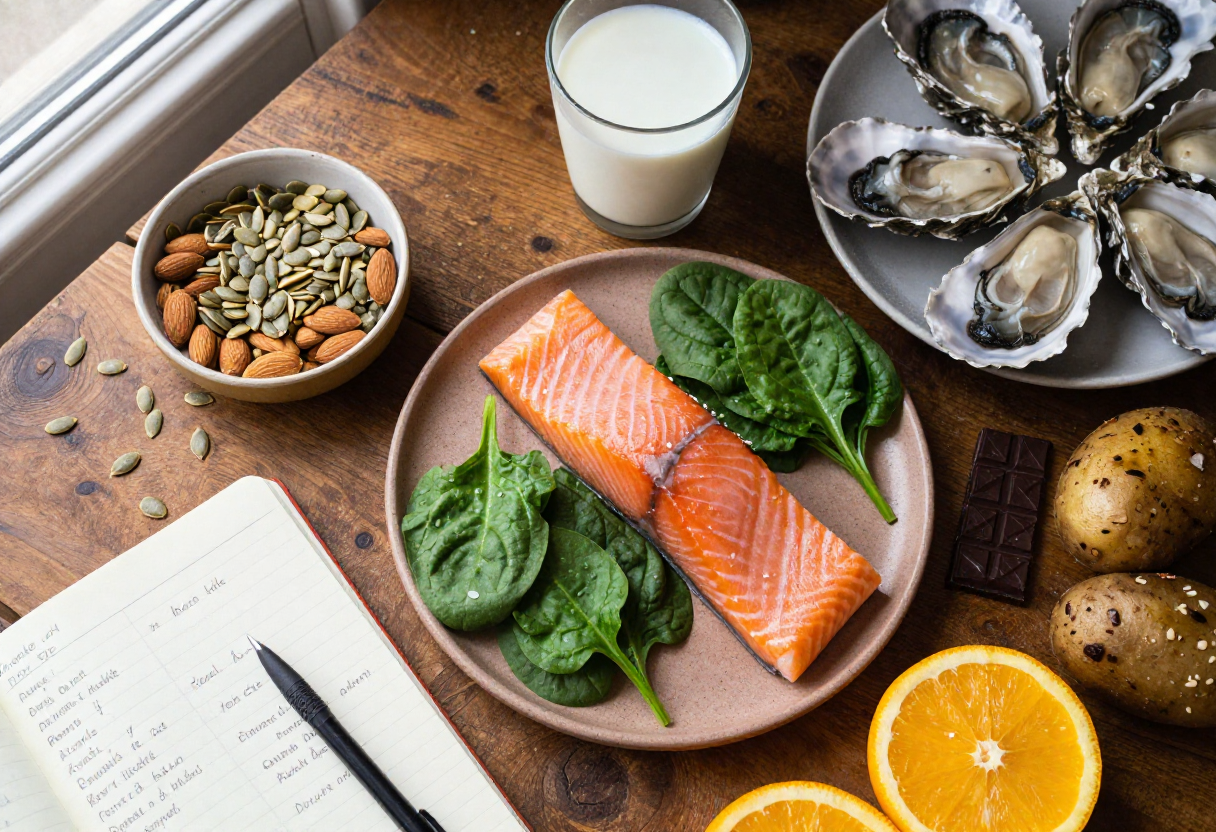
We spend so much time talking about vitamins—C for immunity, D for bones, B12 for energy. But there’s another class of nutrients working just as hard behind the scenes, and they rarely get the spotlight they deserve.
I’m talking about minerals.
These unassuming elements from the earth are involved in virtually every bodily function. Your heartbeat, your brain function, your energy levels, even your ability to taste food—all of it depends on minerals. And unlike some vitamins your body can produce, minerals must come from your diet. Every single one.
According to the Merck Manual, minerals are essential nutrients that cannot be made by the body from other substances . That means if you’re not eating them, you’re running on empty.
Here are five essential minerals your body needs, why they matter, and exactly how to get more of them from real food.
Mineral 1: Calcium – The Bone Builder You Can’t Ignore
Why you need it: Calcium is the most abundant mineral in your body, and for good reason. It’s required for the formation and maintenance of bones and teeth, blood clotting, normal muscle function, proper enzyme activity, and a healthy heart rhythm .
Think of your skeleton as a calcium bank. Your body constantly withdraws small amounts for other functions, and you need to make deposits through your diet to keep the account balanced.
How much you need: The recommended dietary allowance for most adults is 1,000 milligrams daily. Women over 50 and men over 70 need more—about 1,200 milligrams per day .
Where to find it:
-
Dairy: Milk, yogurt, and cheese are the most concentrated sources
-
Fish with bones: Canned salmon and sardines (the soft bones are edible and highly absorbable)
-
Fortified foods: Calcium-set tofu, fortified plant milks, and fortified cereals
-
Leafy greens: Collard greens, kale, broccoli, and mustard greens
-
Legumes: Beans and lentils contribute smaller amounts
One cup of milk provides about 300 milligrams of calcium—roughly one-third of your daily needs.
Mineral 2: Magnesium – The Relaxation Mineral
Why you need it: Magnesium is involved in over 300 enzymatic reactions in your body. It’s essential for nerve and muscle function, bone formation, maintaining a healthy immune system, and helping your body produce energy .
It’s also been studied for its role in women’s health. Research suggests adequate magnesium intake may help prevent symptoms of premenstrual syndrome (PMS) . It supports lung function and helps maintain skeletal and immune system health .
When magnesium levels drop, you might notice muscle cramps, fatigue, or trouble sleeping.
How much you need: Adult women need about 320 milligrams daily; men need about 420 milligrams .
Where to find it:
-
Seeds: Pumpkin seeds are magnesium powerhouses—just one ounce provides over 150 milligrams
-
Nuts: Almonds, cashews, hazelnuts, and Brazil nuts
-
Leafy greens: Spinach, cooked greens, and other dark leafy vegetables
-
Legumes: Beans, lentils, and peas
-
Whole grains: Wheat germ, oat bran, and brown rice
-
Seafood: Oysters and shrimp contain magnesium
-
Dark chocolate: Yes, chocolate counts—the darker, the better
A quarter cup of pumpkin seeds provides about 190 milligrams of magnesium—more than half your daily needs.
Mineral 3: Iron – The Oxygen Carrier
Why you need it: Iron is essential for producing hemoglobin, the protein in red blood cells that carries oxygen from your lungs to every tissue in your body . It’s also involved in energy metabolism, collagen production, and immune function .
Without enough iron, your cells don’t get enough oxygen. You feel tired, weak, and mentally foggy. Iron deficiency is the most common nutritional deficiency worldwide, and women of childbearing age are at highest risk due to menstrual blood loss .
How much you need: The recommendations vary significantly by age and gender:
-
Men and women over 50: 8 milligrams daily
-
Women 50 and younger: 18 milligrams daily (due to menstruation)
-
Pregnant women: 27 milligrams daily
-
Breastfeeding women: 9 milligrams daily
Where to find it (two types matter): Iron comes in two forms. Heme iron from animal sources is absorbed more easily. Non-heme iron from plants is still valuable but less absorbable .
Heme sources (highly absorbable):
-
Red meat, liver, and organ meats
-
Poultry, especially dark meat
-
Fish and shellfish, particularly clams and oysters
Non-heme sources (pair with vitamin C for better absorption):
-
Legumes: lentils, beans, and peas
-
Dark leafy greens: spinach and broccoli
-
Dried fruits: raisins and prunes
-
Iron-fortified cereals and grains
Pro tip: Eating vitamin C-rich foods (citrus, bell peppers, tomatoes) alongside plant iron sources can triple your absorption.
Mineral 4: Potassium – The Blood Pressure Regulator
Why you need it: Potassium is critical for nerve transmission, muscle contraction, and maintaining proper fluid balance . It works in opposition to sodium—while sodium raises blood pressure, potassium helps lower it by relaxing blood vessel walls and excreting excess sodium.
Most of us get plenty of sodium (especially from processed foods) but fall short on potassium. This imbalance is a major contributor to high blood pressure.
How much you need: Adult men need about 3,400 milligrams daily; women need about 2,600 milligrams .
Where to find it:
-
Fruits: Bananas are famous, but they’re not the richest source. Better options include oranges, melons, tomatoes, prunes, raisins, and apricots
-
Vegetables: Potatoes and sweet potatoes (with skin), spinach, Swiss chard, kale, and other leafy greens
-
Legumes: Most peas and beans are excellent sources
-
Dairy: Milk and yogurt
-
Meats and fish: All contain potassium
One medium baked potato with skin provides about 900 milligrams of potassium—roughly one-third of your daily needs.
Mineral 5: Zinc – The Immunity Defender
Why you need it: Zinc is involved in hundreds of enzyme reactions and plays a crucial role in immune function, wound healing, protein and DNA synthesis, and normal growth and development . It’s essential for taste perception, sperm production, and fetal development .
Even mild zinc deficiency can impair immune function, making you more susceptible to infections. It’s particularly important for children’s growth and for maintaining healthy skin .
How much you need: Adult men need 11 milligrams daily; women need 8 milligrams .
Where to find it:
-
Oysters: The absolute richest source—just a few oysters can meet your daily needs
-
Meat and poultry: Beef, liver, and dark meat chicken
-
Seafood: Crab and other shellfish
-
Nuts and seeds: Cashews, pumpkin seeds, and peanuts
-
Legumes: Chickpeas, lentils, and beans
-
Whole grains: Oats, brown rice, and whole wheat
-
Fortified cereals: Many breakfast cereals are zinc-fortified
Six medium oysters provide about 32 milligrams of zinc—nearly three times your daily needs.
The Bigger Picture: Food First, Supplements Second
Here’s something worth noting: while supplements have their place, experts agree that getting minerals from food is usually preferable.
Dr. Shilpa Bhupathiraju from Harvard Medical School explains that foods, unlike supplements, contain other substances necessary for good health . Routine use of nutritional supplements isn’t necessary or beneficial for people who eat a healthy diet, and some supplements can actually be harmful in excess .
For example, too much zinc can interfere with copper absorption and impair immune function . Too much calcium from supplements has been linked to kidney stones . The goal is adequacy, not excess.
Some minerals also act as antioxidants—selenium, for instance, works with vitamin E to protect cells from damage . These protective effects come from food sources, and research hasn’t found the same benefits from supplements .
Simple Ways to Boost Your Mineral Intake
You don’t need a complicated plan to get enough minerals. Small, consistent choices add up:
-
Start your day with oats. Top with nuts, seeds, and fruit for magnesium, zinc, and potassium.
-
Eat a variety of colors. Different colored fruits and vegetables bring different minerals to the table.
-
Include protein at every meal. Meat, fish, eggs, legumes, and dairy all contribute minerals your body needs.
-
Snack on nuts and seeds. A small handful of almonds or pumpkin seeds delivers magnesium, zinc, and copper.
-
Use herbs and spices. Many are concentrated sources of trace minerals.
-
Drink water. Some minerals, including calcium and magnesium, are present in “hard” drinking water .
The Bottom Line
Minerals aren’t flashy. You can’t see them, taste them, or feel them working. But they’re the foundation upon which your health is built—every heartbeat, every thought, every movement depends on them.
The good news? Your body doesn’t need perfection. It needs consistency. A varied diet rich in whole foods—vegetables, fruits, legumes, nuts, seeds, lean proteins, and dairy—will naturally provide the minerals you need.
As the Merck Manual notes, vitamins and minerals are essential nutrients that must be consumed in the diet because the body cannot make them from other substances . Getting enough from food is usually preferable to supplements, and for most people eating a healthy diet, routine supplementation isn’t necessary .
So focus on real food, eat the rainbow, and trust that your body knows what to do with the minerals you give it. The unsung heroes don’t need applause—they just need to be part of your daily life.
Want to know if you’re getting enough minerals from your diet? I’ve created a “Mineral Intake Self-Assessment Guide” —a simple worksheet to help you track your typical eating patterns, identify potential gaps, and make small adjustments that add up over time. It includes a food sources cheat sheet you can stick on your fridge.
[Download Your Free Mineral Intake Self-Assessment Guide Here]
Your body is running on minerals every single second. Give it what it needs to thrive.