
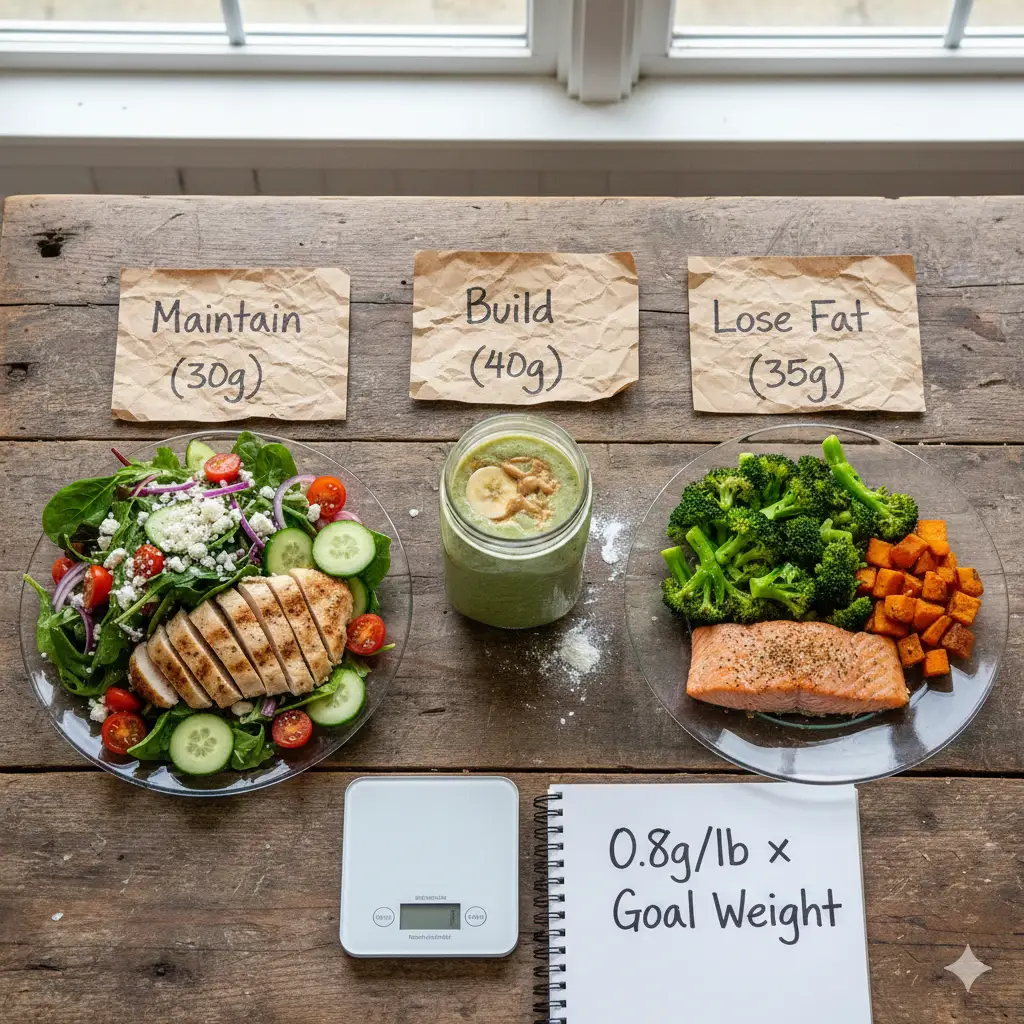
Let’s start with a confession: I spent years getting protein wrong. I’d see a bodybuilder on a magazine cover downing a chalky shake and think, “That’s the secret.” So I bought the giant tub, choked down three servings a day, and waited for the magic to happen. All I got was expensive urine and a permanent chalky aftertaste. Meanwhile, my workouts plateaued, and my hunger was a beast I couldn’t tame.
Sound familiar? You’re bombarded with messages: “Eat more protein!” “Too much protein hurts your kidneys!” “Plant-based is best!” “You need animal protein!” It’s a nutritional cacophony designed to sell you something, leaving you with a simple, frustrating question: What should I actually be putting on my plate?
Forget the hype. This isn’t about bro-science or pushing supplements. This is a calm, evidence-based walk through the real role of protein in your body. We’re going to cut through the noise with science, not slogans, and give you a simple, personalized formula so you can stop guessing and start making progress—whether your goal is building muscle, losing fat, or just feeling solid and satiated every day.
The “Why” Before the “How Much”: Protein Isn’t Just for Bodybuilders
Think of protein as your body’s construction crew and repair team. Every time you move, think, breathe, or heal, you’re using proteins. They are the building blocks of your muscles, sure, but also your hormones, enzymes, immune cells, hair, skin, and nails.
When you don’t eat enough, your body faces a crisis. It’s like running a construction site without enough lumber. Projects get delayed, repairs are shoddy, and eventually, the foreman (your body) might start tearing down a shed (muscle tissue) to fix the main house. This is why adequate protein is crucial for everyone, not just gym rats. It’s the fundamental nutrient of maintenance and repair.
The Goldilocks Formula: Finding Your “Just Right” Number
Here’s where we ditch the one-size-fits-all advice. Your protein need depends on your body composition and your goal. Let’s break it down with a formula you can use today.
The Evidence-Based Range: 0.7 to 1.0 grams per pound of GOAL body weight.
Notice I said goal weight. This is the most important nuance most people miss.
-
If your goal is to MAINTAIN (You’re happy where you are):
-
Formula: 0.7 – 0.8 g/lb of your current body weight.
-
Example: A 160-lb person = 112-128g of protein daily.
-
-
If your goal is to BUILD MUSCLE:
-
Formula: 0.8 – 1.0 g/lb of your current body weight. The higher end is for those in a serious training regimen or in a calorie surplus.
-
Example: A 180-lb person aiming to add muscle = 144-180g daily.
-
-
If your goal is to LOSE FAT (The Critical Application):
-
Formula: 0.8 – 1.0 g/lb of your GOAL body weight.
-
Why This Matters: Let’s say you weigh 200 lbs and want to get to 170 lbs. If you use your current weight (200), you’d eat 160-200g—that’s a lot of calories that could slow your fat loss. If you use your goal weight (170), you’re aiming for 136-170g. This ensures you get enough to preserve precious muscle while in a calorie deficit, so you lose fat, not muscle. This is the secret to getting “toned.”
-
The Reality Check: A 150-lb woman looking to get leaner at 135 lbs needs about 108-135g of protein per day, not the 200g some influencers might scream about.
The Kidney Myth: Let’s Bury This Once and For All
I need to address the elephant in the room, because someone’s aunt on Facebook has probably warned you: “All that protein is going to ruin your kidneys!”
Here is the unequivocal truth, backed by decades of research: For individuals with healthy, functioning kidneys, a high-protein diet does not cause harm.
This pervasive myth stems from a fundamental misunderstanding. Studies that show kidney stress from high protein intake are conducted on patients with preexisting kidney disease. In these patients, the kidneys are already damaged, and processing a high protein load is like asking a sprained ankle to run a marathon—it’s a bad idea.
For a healthy person, the kidneys are more than capable of handling the increased nitrogenous waste from protein metabolism. They adapt. If you have a family history of kidney disease or existing concerns, the answer isn’t fear—it’s data. Get a simple blood test (eGFR) from your doctor for peace of mind, not dietary advice from internet myths.
The Protein Leverage Hypothesis: Your Secret Weapon Against Cravings
This is my favorite piece of protein science because it explains so much about daily hunger. The Protein Leverage Hypothesis suggests that your body has a strong drive to meet its protein requirement. It will keep signaling hunger until you hit that target, regardless of total calories.
This is why you can devour an entire family-sized bag of potato chips (high in fat and carbs, low in protein) and still feel vaguely unsatisfied and “snacky” an hour later. Your body got a ton of calories, but it didn’t get the protein it needed, so the hunger signals never fully turned off.
The practical application is revolutionary: Prioritize protein at every meal. Hit your target, and you’ll find cravings for processed junk naturally subside. Your appetite becomes regulated by nutrition, not just calorie volume.
What Does 30 Grams of Protein Actually Look Like?
Numbers on a page are useless without context. Let’s translate grams into real food.
30g of protein is roughly:
-
1 cup (227g) of 2% plain Greek yogurt + 1 oz of almonds.
-
4 oz (the size of your palm) of cooked chicken breast.
-
1 scoop of quality whey or plant-based protein powder.
-
1.5 cups of cooked lentils or black beans.
-
5 large whole eggs.
A “Maintenance” Day for a 160-lb Person (~120g protein):
-
Breakfast: 2 eggs + 3 egg whites scrambled with spinach (25g)
-
Lunch: Salad with 4 oz grilled chicken (35g)
-
Snack: 1 cup Greek yogurt (20g)
-
Dinner: 5 oz salmon + 1 cup quinoa (40g)
See? No mystery powders required. It’s strategic, whole-food choices.
Timing: The Icing, Not the Cake
The post-workout “anabolic window” has been blown out of proportion. For the average person, total daily intake is far more important than precise timing.
That said, a practical approach is to space your protein evenly across 3-4 meals. This provides a steady stream of amino acids to your muscles throughout the day, maximizing muscle protein synthesis. Aim for 20-40g per meal. Having a protein-rich meal or snack within a couple of hours of your workout is a good practice, but don’t stress if it’s not immediately after.
Your First Step: The Protein Priority Plate
At your next meal, before you do anything else, identify your protein source. Put it on your plate first. Then add your vegetables, healthy fats, and complex carbs around it. This simple visual shift—making protein the anchor—will do more for your nutrition than any complicated diet plan.
Protein isn’t a supplement. It’s a foundation. When you get this right, everything else—energy, body composition, strength, satiety—starts to fall into place. Stop fearing it, and start fueling with it.