
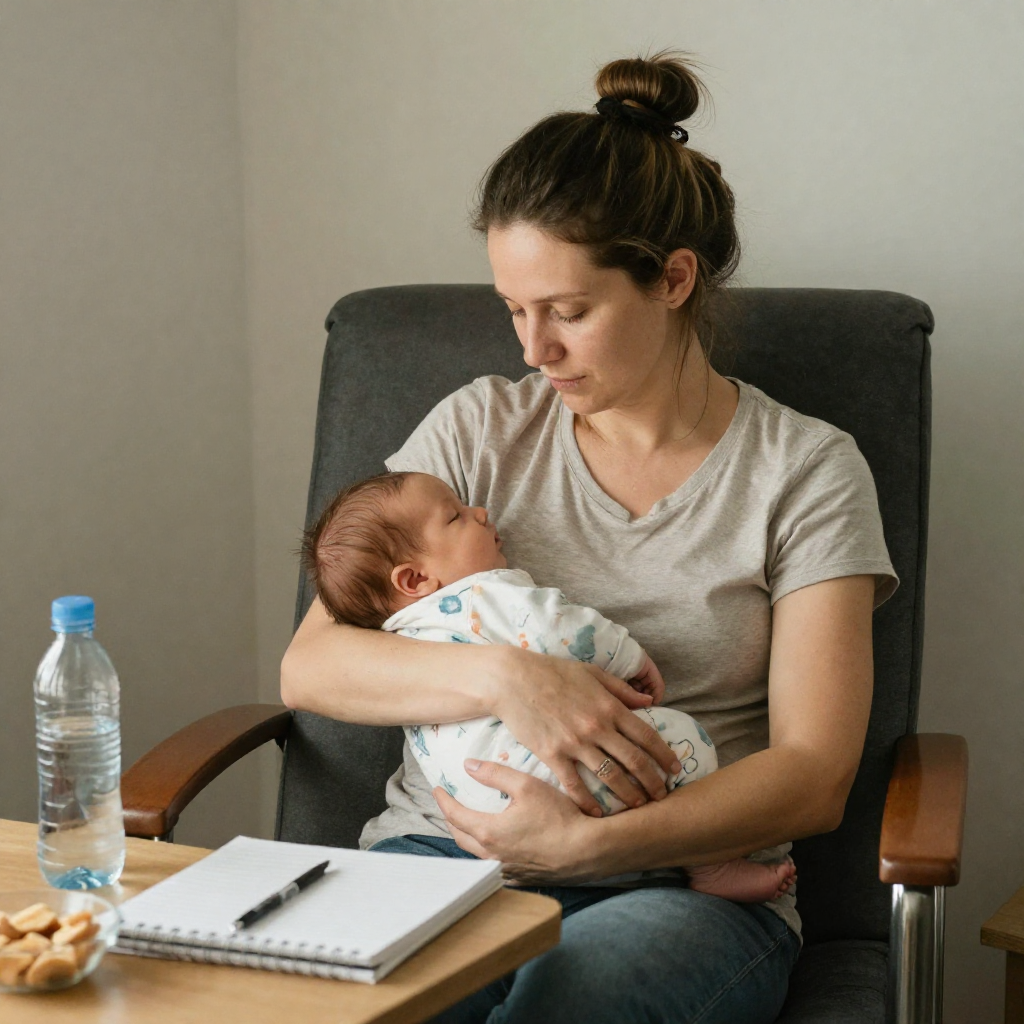
You spent nine months preparing for labor. You read the books, packed the hospital bag, practiced the breathing. And then the baby came.
And suddenly, everyone’s attention shifts to the tiny human in your arms. The postpartum checkups are minimal. The advice you get is often a vague “take it easy” or the dreaded “sleep when the baby sleeps.”
Here’s what no one told me: The fourth trimester—the three months after birth—is its own journey. And you deserve as much care and attention as your newborn.
Your body has been through something extraordinary. Whether you had a vaginal birth or a C-section, with or without complications, you need time to heal. Not just physically, but mentally and emotionally.
Let’s talk about what recovery actually looks like, what’s normal, and how to give yourself the care you deserve.
The Physical Reality: What Just Happened to Your Body
Birth is not a small event. Even under the best circumstances, your body has undergone massive changes:
-
Your uterus expanded from the size of a pear to accommodate a full-term baby. After birth, it needs to contract back down—a process called involution.
-
Your pelvic floor stretched and possibly tore or was cut (episiotomy). It’s been supporting a baby for months.
-
Your abdominal muscles may have separated (diastasis recti) to make room.
-
Your hormones are in freefall. Estrogen and progesterone drop dramatically after delivery.
-
Your blood volume is returning to pre-pregnancy levels.
-
Your ligaments are still loose from relaxin (the hormone that loosens joints for birth).
-
If you had a C-section, you’ve had major abdominal surgery. You have a wound healing across your uterus and abdomen.
This is not “back to normal” territory. This is recovery territory.
The Fourth Trimester Timeline: What to Expect
First 1-2 Weeks: The Acute Recovery Phase
Vaginal birth:
-
Bleeding (lochia): Heavy, bright red bleeding for the first few days, gradually tapering to pink, then yellowish-white over 2-6 weeks.
-
Perineal soreness: Swelling, bruising, and pain where you tore or were cut. Stitches may dissolve over 1-2 weeks.
-
Afterpains: Your uterus contracting back down. Often stronger with second and subsequent babies.
-
Difficulty peeing or pooping: Anesthesia, swelling, and fear of pain can make bathroom trips challenging.
-
Hemorrhoids: Common from pushing; can be very uncomfortable.
-
Fatigue: Profound. Your body is healing, you’re up with a newborn, and hormones are shifting.
C-section:
-
Incision pain: Significant. Moving, coughing, laughing, sneezing all hurt.
-
Limited mobility: You can’t lift anything heavier than your baby. No driving for 2 weeks (or longer, depending on your provider).
-
Bleeding (lochia): Same as vaginal birth—your uterus still needs to shed its lining.
-
Gas pain and constipation: Anesthesia slows digestion; gas pains can be severe.
-
Fatigue: Plus surgery recovery on top of newborn care.
Weeks 2-6: The Active Healing Phase
-
Bleeding tapers and may stop; it can reappear with increased activity (your body’s way of saying slow down).
-
Stitches dissolve or are absorbed.
-
Pain decreases, but you still tire easily.
-
Your pelvic floor is still weak; lifting, jumping, running are not yet safe.
-
C-section incision heals externally; internal healing continues for months.
-
Emotions may still be volatile; this is when postpartum mood disorders often emerge.
Weeks 6-12: The Strengthening Phase
-
First postpartum checkup (often around 6 weeks). This is when you’re typically cleared for exercise and intercourse.
-
Important note: Being “cleared” doesn’t mean you’re fully healed. It means no acute issues. Pelvic floor may still be weak. Diastasis recti may still be present.
-
Fatigue may still be significant, especially with sleep deprivation.
-
Gradual return to activity begins—if your body is ready.
What to Know About Pelvic Floor Recovery
Your pelvic floor muscles stretched to accommodate your baby. They may be weakened, tight, or both. Symptoms of pelvic floor dysfunction include:
-
Leaking urine when you cough, laugh, sneeze, or exercise
-
Urgency (feeling like you need to pee immediately)
-
Feeling of heaviness or pressure in the vagina (possible prolapse)
-
Difficulty with bowel movements
-
Pain with intercourse
What helps:
-
See a pelvic floor physical therapist. This is the single best thing you can do for recovery. They can assess your specific issues and give you exercises—which may include relaxation and stretching, not just Kegels.
-
Learn to breathe and brace properly before returning to exercise.
-
Avoid crunches, sit-ups, and planks until you know your diastasis recti status.
Diastasis Recti: The Abdominal Separation
Diastasis recti is the separation of the two sides of your rectus abdominis (your “six-pack” muscles). It’s normal during pregnancy; it usually resolves gradually, but sometimes persists.
Signs:
-
A ridge or bulge running down your midline when you sit up from lying down
-
Lower back pain
-
Difficulty engaging your core
What helps:
-
Avoid traditional ab exercises (crunches, sit-ups, planks) until assessed—they can worsen separation.
-
Focus on deep core work: Transverse abdominis activation, diaphragmatic breathing, bird-dogs, heel slides.
-
Work with a physical therapist who can teach you safe exercises.
The C-Section: It’s Major Surgery
One in three babies in the US is born via C-section. Yet recovery advice is often treated as an afterthought.
C-section recovery essentials:
-
Move gently as soon as you can. Walking helps prevent blood clots and aids healing. But don’t overdo it.
-
Support your incision. Hold a pillow against your belly when coughing, sneezing, or laughing.
-
Keep the incision clean and dry. Watch for signs of infection (increased redness, discharge, fever).
-
No lifting anything heavier than your baby for at least 4-6 weeks.
-
No driving while on pain medication or for at least 2 weeks; check with your provider.
-
Internal healing takes months. Just because the outside looks healed doesn’t mean the inside is.
-
Scar massage after 6-8 weeks can help with adhesions and sensitivity.
Mental Health: The Fourth Trimester Emotional Rollercoaster
Hormonal shifts, sleep deprivation, and the massive identity shift of becoming a parent can take a toll.
Baby Blues vs. Postpartum Depression
Baby blues:
-
Affects up to 80% of new mothers
-
Starts 2-3 days after birth
-
Includes mood swings, crying, anxiety, irritability
-
Resolves within 2 weeks
Postpartum Depression (PPD):
-
Affects about 1 in 7 women
-
Symptoms persist beyond 2 weeks
-
Includes persistent sadness, loss of interest, changes in appetite/sleep, guilt, feeling overwhelmed, difficulty bonding with baby
-
Can start anytime in the first year
Postpartum Anxiety:
-
Often overlooked
-
Includes constant worry, racing thoughts, physical symptoms (racing heart, nausea), inability to relax
-
May include intrusive thoughts (scary, repetitive thoughts about harm coming to baby)
What helps:
-
Talk to your provider. Be honest about how you’re feeling. There is no shame.
-
Therapy (especially with someone trained in perinatal mental health) is highly effective.
-
Medication (antidepressants) are safe during breastfeeding and can be life-changing.
-
Support groups connect you with others going through the same thing.
-
Asking for help is not weakness. It’s necessary.
Returning to Exercise Safely
The old “6-week clearance” is a guideline, not a magic switch. Returning to exercise too soon can cause injury, leaking, prolapse, or prolonged healing.
Guidelines:
-
First 6 weeks: Rest, walk gently, pelvic floor exercises (if appropriate), deep core breathing.
-
Get assessed by a pelvic floor PT before resuming high-impact exercise.
-
Start with low-impact: Walking, gentle yoga, postpartum-specific programs.
-
Progress gradually: If you leak, feel pressure, or have pain, back off.
-
Listen to your body. It will tell you when something is too much.
Nutrition and Hydration for Healing
Your body needs fuel to heal.
-
Protein: Essential for tissue repair. Aim for 20-30 grams per meal.
-
Iron: Especially if you lost blood during delivery. Red meat, leafy greens, lentils.
-
Calcium and vitamin D: Support bone recovery, especially if breastfeeding.
-
Hydration: Critical if breastfeeding (you need extra fluids) and for preventing constipation.
-
Fiber: For regular bowel movements, especially if taking iron or pain meds.
-
Easy, nutrient-dense foods: You’re exhausted. Prioritize meals that are simple: prepped soups, frozen vegetables, eggs, yogurt, nuts.
The Mental Load of the Fourth Trimester
Beyond physical recovery, there’s the mental weight:
-
Learning to care for a newborn
-
Sleep deprivation (which impairs everything)
-
Navigating feeding challenges (breastfeeding difficulties are common)
-
Processing your birth experience (which may not have gone as planned)
-
Adjusting to a new identity
-
Managing relationships with partner, family, in-laws
-
Returning to work or navigating leave
What helps:
-
Lower your expectations. Your house doesn’t need to be clean. Meals can be simple. The baby is the priority.
-
Accept help. When someone asks what they can do, say yes. Give specific tasks: “Bring dinner,” “Hold the baby so I can shower,” “Pick up groceries.”
-
Sleep when you can. Not just “when the baby sleeps”—that’s often impossible. But prioritize rest over productivity.
-
Find your people. Other new parents who get it. Online communities. Support groups.
-
Be kind to yourself. This is hard. You’re doing a hard thing. You’re not failing.
When to Call Your Provider
Seek medical help if you experience:
-
Fever (over 100.4°F)
-
Heavy bleeding (soaking a pad in an hour, clots larger than a golf ball)
-
Severe pain (not relieved by medication)
-
Redness, swelling, or discharge from perineum or C-section incision
-
Calf pain or swelling (possible blood clot)
-
Thoughts of harming yourself or baby (go to ER immediately)
-
Inability to urinate or severe constipation
-
Shortness of breath or chest pain
-
Severe headache with vision changes
The Bottom Line
The fourth trimester is a season. It will pass. But it’s also a critical time for your healing—physically, mentally, and emotionally.
You don’t need to “bounce back.” You need to heal forward.
Give yourself permission to rest. Accept help. Lower expectations. Ask for support when you need it—medically, emotionally, practically.
Your body grew a human. It birthed a human. It deserves time and care to recover. You are not weak for needing that time. You are wise for taking it.