
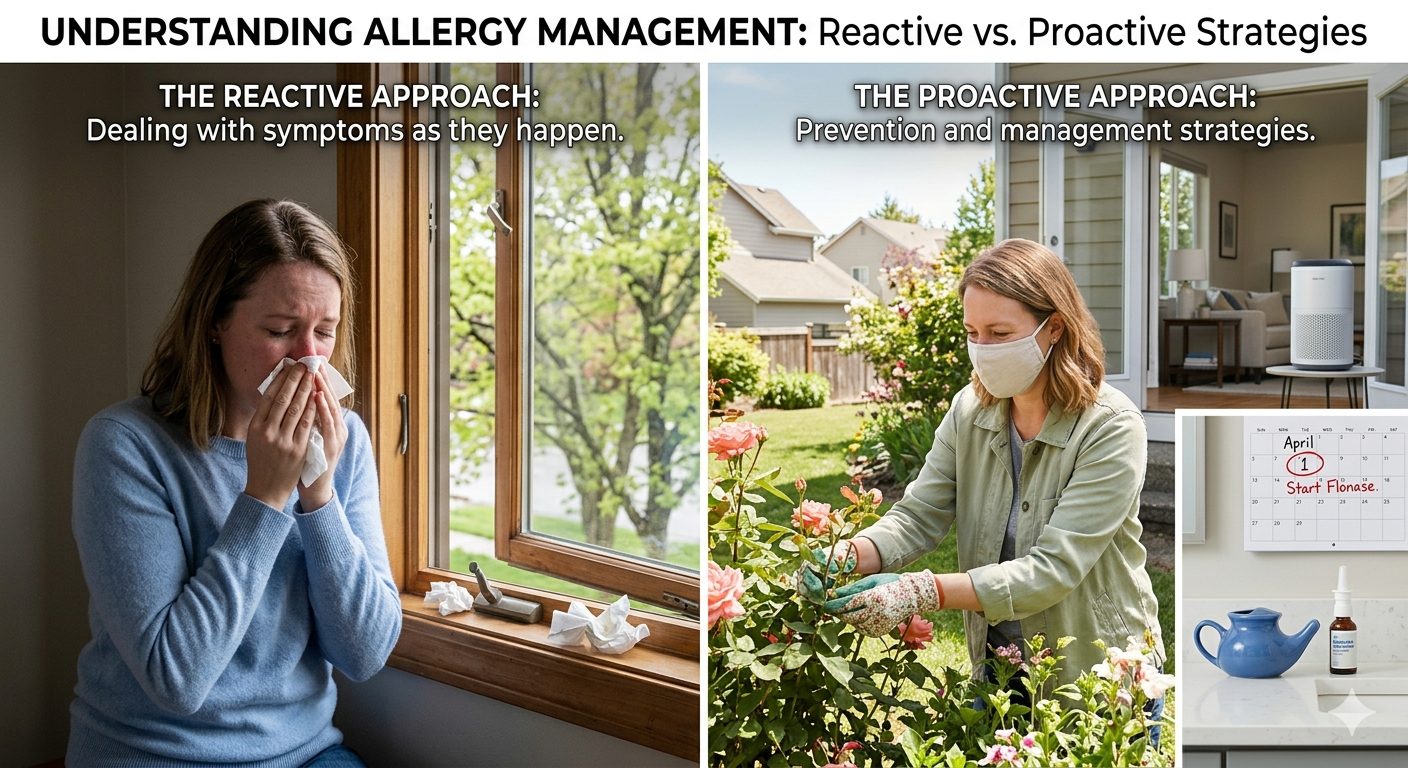
Let me paint a picture you probably know well. Spring arrives. The trees bloom. The grass grows. And you, along with millions of others, turn into a sneezing, sniffling, itchy eyed mess. You love the warmer weather. You hate what it does to your face.
Seasonal allergies are not just annoying. They affect sleep, concentration, work performance, and quality of life. For some people, they trigger asthma or sinus infections.
Here is what makes this frustrating. There is no cure for seasonal allergies. But there are many ways to manage them. Some are natural and lifestyle based. Others are medications with decades of evidence. The key is matching the right strategy to your symptoms.
Let’s talk about what actually happens during an allergic reaction, how to prevent symptoms before they start, and how to choose among the many treatment options.
What Is Happening Inside Your Body
Seasonal allergies (allergic rhinitis or hay fever) are an immune overreaction. Your body mistakes harmless substances pollen, mold spores, dust mites for dangerous invaders. It mounts a defense.
Here is the step by step process.
You inhale pollen. Your immune system produces IgE antibodies specific to that pollen. These antibodies attach to mast cells (immune cells in your nose, eyes, lungs). The next time you inhale that pollen, it binds to the IgE and triggers the mast cells to release histamine and other chemicals.
Histamine causes:
-
Itching (eyes, nose, throat)
-
Sneezing (your body trying to expel the allergen)
-
Runny nose (increased mucus production)
-
Watery eyes
-
Swelling (tissue inflammation, nasal congestion)
This is not a weakness or a character flaw. It is your immune system misidentifying a friend as a foe. The goal of treatment is not to shut down your immune system completely. It is to calm the overreaction.
Common Triggers by Season
Different plants pollinate at different times. Knowing your triggers helps you prepare.
Spring (March to May): Tree pollen. Oak, birch, cedar, maple, elm, and pine are common culprits. Tree pollen is often the first trigger of the season.
Summer (May to July): Grass pollen. Timothy, Bermuda, rye, Kentucky bluegrass. Grass allergies can be severe and long lasting.
Late Summer to Fall (August to October): Ragweed is the biggest offender. Other weeds include sagebrush, pigweed, lamb’s quarters.
Year Round (Indoor Allergens): Dust mites, mold spores, pet dander. Not seasonal but can worsen seasonal symptoms.
Warm, windy days spread pollen. Rain clears pollen from the air (temporary relief). After rain, pollen counts often rise again as plants release more.
Natural and Lifestyle Strategies
These approaches reduce your exposure and support your body without medication. They work best for mild to moderate symptoms or as complements to medication.
Reduce Exposure
Check pollen counts daily. Weather apps and websites like Pollen.com report levels. On high pollen days, limit outdoor time, keep windows closed, and run air conditioning.
Time your outdoor activities. Pollen counts are highest in the morning (5 AM to 10 AM). Exercise in the late afternoon or after rain when counts are lower.
Shower and change clothes after being outside. Pollen clings to hair, skin, and clothing. Rinse off when you come indoors. Wash your hair before bed so you are not transferring pollen to your pillow.
Keep windows closed. At home and in the car. Use air conditioning with a clean filter.
Dry laundry indoors. Hanging sheets or clothes outside collects pollen, which then touches your face all night.
Use a HEPA air purifier. Especially in your bedroom. It removes pollen and other particles from indoor air.
Wear a mask when gardening or mowing. N95 masks filter pollen. It looks unusual but works remarkably well.
Nasal Irrigation (Neti Pot)
This is one of the most effective non medication interventions. Rinsing your nasal passages physically removes pollen and mucus.
How to do it: Use a neti pot, squeeze bottle, or bulb syringe. Mix distilled, sterile, or previously boiled (then cooled) water with saline packets or non iodized salt. Lean over a sink, tilt your head, and pour into one nostril. It flows through and out the other nostril. Repeat on other side.
Important safety note: Use only distilled, sterile, or boiled water. Tap water can contain microorganisms that cause serious infections. Clean and dry the device after each use.
Frequency: Once or twice daily during allergy season. More often if symptoms are severe.
Dietary Support
Some foods and supplements may reduce allergy symptoms.
Quercetin: A plant pigment that acts as a natural antihistamine. Found in onions, apples, berries, capers, and green tea. Supplements are available but limited evidence.
Vitamin C: Has weak antihistamine properties. Eating citrus, bell peppers, kiwi, and broccoli helps overall immune health.
Local honey: A popular folk remedy. The theory is that local honey contains local pollen and may desensitize you. Evidence is weak or nonexistent. It tastes good but is not a reliable treatment.
Omega 3 fatty acids: Reduce inflammation. Fatty fish, walnuts, flaxseeds.
Spicy foods: Capsaicin in hot peppers can temporarily clear nasal passages. Symptom relief, not treatment.
Avoid Certain Foods (Oral Allergy Syndrome)
Some people with pollen allergies react to certain raw fruits and vegetables. The proteins are similar enough to pollen cross reactive.
-
Birch pollen allergy: Reactions to raw apples, pears, peaches, cherries, carrots, celery
-
Ragweed allergy: Reactions to melons, bananas, cucumbers, zucchini
Cooking usually destroys the cross reactive proteins. This is not a true food allergy. It is annoying but rarely dangerous.
Over the Counter Medications
When natural strategies are not enough, medications provide reliable relief.
Antihistamines
These block histamine receptors, preventing the chain reaction. They work best for itching, sneezing, and runny nose. They are less effective for nasal congestion.
Oral antihistamines:
-
Fexofenadine (Allegra): Non drowsy, long acting. One of the best tolerated.
-
Loratadine (Claritin): Non drowsy, good for mild symptoms.
-
Cetirizine (Zyrtec): Non drowsy for most, but some people find it mildly sedating. Slightly stronger than loratadine.
-
Levocetirizine (Xyzal): Similar to cetirizine.
-
Diphenhydramine (Benadryl): Effective but highly sedating. Best for occasional nighttime use.
Start antihistamines 1 to 2 weeks before your allergy season begins. They are more preventive than curative. Take them daily during the season, not just when you have symptoms.
Nasal antihistamine sprays:
-
Azelastine (Astelin, Astepro): Works faster than oral antihistamines, within 15 minutes. Can have a bitter taste. Combination sprays with steroids are available.
Nasal Corticosteroid Sprays
These are the most effective allergy medications for nasal congestion and overall symptoms. They reduce inflammation directly in the nose.
Options: Fluticasone (Flonase), triamcinolone (Nasacort), budesonide (Rhinocort), mometasone (Nasonex). All are available over the counter.
How to use them correctly: Most people use them wrong. They do not work immediately. It takes several days to weeks to see full effect. They work best when used daily, not as needed. Aim the spray toward the outside of your nostril (away from the septum) to avoid irritation. Do not sniff hard.
Side effects: Mild irritation, nosebleeds, dryness. Usually manageable.
Decongestants
These shrink swollen blood vessels in the nose, relieving congestion quickly. They do not treat the underlying allergy.
Oral decongestants: Pseudoephedrine (behind the pharmacy counter, not full access). Avoid phenylephrine (ineffective in oral form). Oral decongestants can raise blood pressure and heart rate. Do not use if you have high blood pressure, heart disease, or glaucoma.
Nasal decongestant sprays: Oxymetazoline (Afrin). Effective within minutes. Here is the critical warning: Do not use for more than three consecutive days. Longer use causes rebound congestion (rhinitis medicamentosa). Your nose becomes dependent on the spray. Withdrawal is miserable.
Limit use to occasional, short term relief. For daily congestion, use nasal steroid sprays instead.
Combination Products
Many allergy medications combine an antihistamine with a decongestant (Allegra D, Claritin D, Zyrtec D). The decongestant requires an ID to purchase. They are effective but not for long term daily use due to decongestant side effects.
Prescription Options
If over the counter medications are not enough, see an allergist.
Stronger nasal sprays: Higher doses or different steroids available by prescription.
Leukotriene receptor antagonists: Montelukast (Singulair). Blocks different inflammatory chemicals. Effective for asthma and allergies. Has a boxed warning for serious neuropsychiatric side effects (agitation, depression, suicidal thoughts). Not first line but helpful for some.
Allergy shots (immunotherapy): The closest thing to a cure. Regular injections of gradually increasing allergen doses retrain your immune system. Requires commitment (3 to 5 years of treatment). Highly effective. Covered by insurance for many.
Sublingual immunotherapy (SLIT): Tablets placed under the tongue, daily. Available for grass, ragweed, and dust mite allergies. More convenient than shots but not available for all allergens.
Common Mistakes When Managing Allergies
Mistake 1: Waiting for Symptoms to Start
By the time you are sneezing and miserable, you are playing catch up. Allergies are easier to prevent than to treat.
The fix: Start medications (especially nasal steroid sprays) 1 to 2 weeks before your typical allergy season. Check pollen counts and begin early.
Mistake 2: Taking Antihistamines Only When Symptoms Are Bad
Antihistamines work best when taken daily during allergy season. They prevent histamine from binding to receptors. Taking them inconsistently means your receptors are sometimes unprotected.
The fix: Take your antihistamine daily, not as needed.
Mistake 3: Using Nasal Spray Incorrectly
Many people aim the spray straight back, causing it to drip down the throat or irritate the septum. They also expect immediate results.
The fix: Aim toward the outer wall of your nostril (toward your ear). Use daily for at least two weeks before judging effectiveness.
Mistake 4: Overusing Decongestant Sprays
It is easy to fall into this trap. The spray works so well, you use it again and again. Then you cannot breathe without it.
The fix: Limit to three days. Set a reminder. Use nasal steroid spray for ongoing congestion.
Mistake 5: Blaming Allergies for Everything
Some symptoms overlap with other conditions. Sinus infections, colds, and even COVID 19 can mimic allergies. Fever, facial pain, colored mucus, and symptoms lasting longer than seasonal windows may indicate something else.
The fix: See a doctor if symptoms change, become severe, or do not respond to allergy medications.
Mistake 6: Ignoring Eye Symptoms
Allergic conjunctivitis (red, itchy, watery eyes) is common but undertreated. Rubbing your eyes makes it worse.
The fix: Use antihistamine eye drops (ketotifen) or oral antihistamines. Cold compresses soothe itching.
Frequently Asked Questions
Q: Can allergies cause fatigue?
A: Yes. Allergies disrupt sleep (nasal congestion, mouth breathing). Your immune system working overtime also burns energy. Many people feel exhausted during allergy season.
Q: Can allergies go away on their own?
A: Sometimes. Allergies change over a lifetime. Children may outgrow them. Adults may develop new allergies or lose old ones. You cannot predict.
Q: What is the difference between allergies and a sinus infection?
A: Allergies cause clear mucus, itching, sneezing. Sinus infections cause thick, yellow or green mucus, facial pain (especially leaning forward), fever, and symptoms lasting more than 10 days. Allergies rarely cause fever.
Q: Can I develop allergies as an adult?
A: Yes. Adult onset allergies are common. You are not immune just because you never had them as a child.
Q: Is there a role for probiotics in allergy treatment?
A: Emerging research suggests gut health influences immune function. Some probiotic strains may reduce allergy symptoms. Evidence is not strong enough to recommend specific products, but a healthy gut is beneficial overall.
Q: How do I know which pollen I am allergic to?
A: An allergist can perform skin prick testing or blood testing to identify specific triggers. This guides immunotherapy and avoidance strategies.
Q: Can I take more than one allergy medication at a time?
A: Yes, with care. Combining a nasal steroid spray (daily) with an antihistamine (as needed or daily) is common and safe. Do not combine multiple antihistamines. Do not use oral and nasal decongestants together without doctor guidance.
Q: What about children with seasonal allergies?
A: Many of the same strategies work. Consult a pediatrician for medication dosing. Nasal irrigation is safe with supervision. Immunotherapy is available for children over age 5.
The Bottom Line
Seasonal allergies are manageable. You do not need to suffer.
Start with prevention: check pollen counts, reduce exposure, shower after being outside, use HEPA filters, and start medications early.
For symptom relief, match your medication to your symptoms:
-
Itching, sneezing, runny nose: Antihistamine
-
Nasal congestion: Nasal steroid spray (daily) or decongestant (short term)
-
Eye symptoms: Antihistamine eye drops or oral antihistamine
-
Severe or year round: See an allergist about immunotherapy
You can enjoy spring. You can breathe through summer. You do not have to hide inside for weeks. A combination of smart avoidance, consistent medication use, and patience will get you there.