
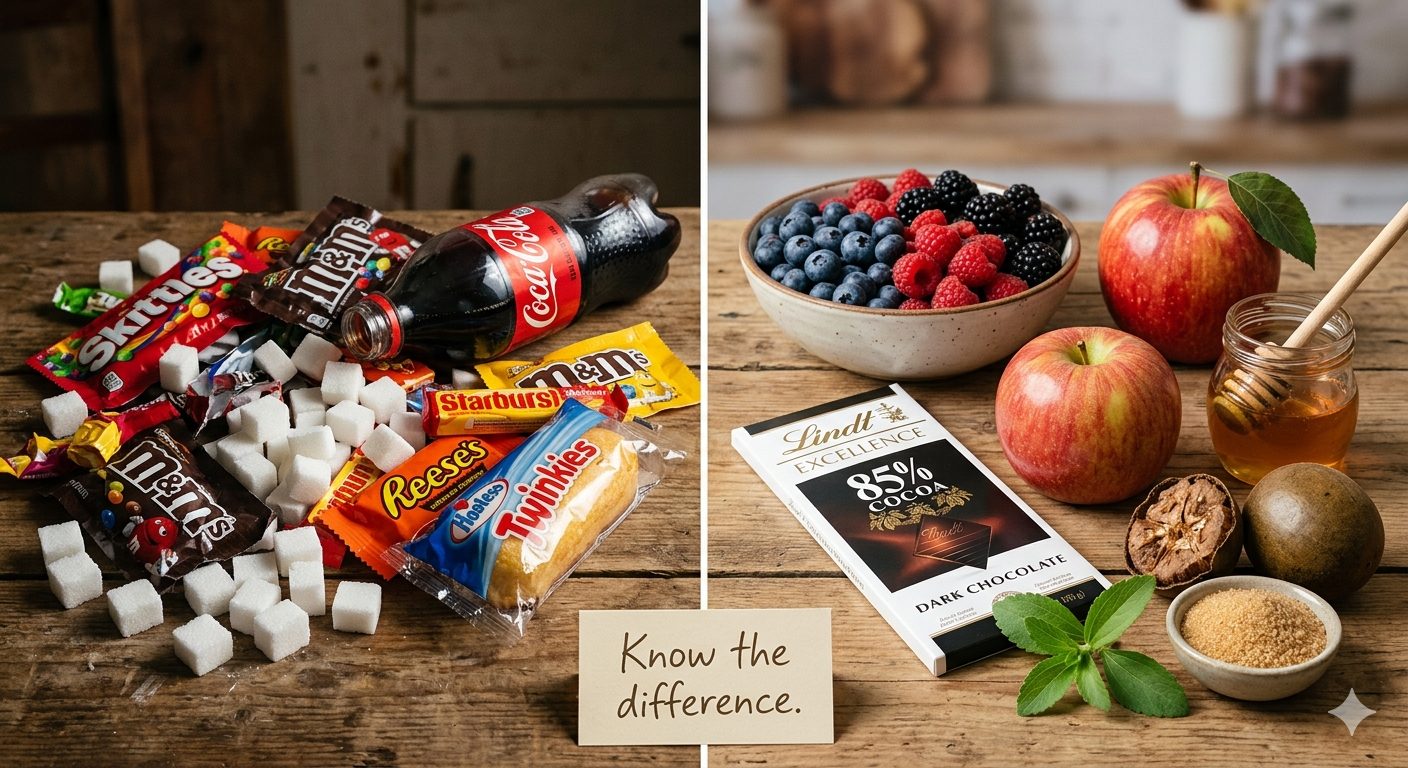
Let’s start with a number that might surprise you: the average American consumes about 17 teaspoons of added sugar every day. That’s nearly 270 calories of pure, empty sweetness.
The recommended limit? For women, 6 teaspoons (25 grams, 100 calories). For men, 9 teaspoons (36 grams, 150 calories).
We’re eating nearly triple what we should. And our bodies are paying the price.
Sugar is everywhere. It’s in your bread, your pasta sauce, your yogurt, your salad dressing, your “healthy” granola bar. It hides under dozens of names. And it’s rewiring your brain, damaging your liver, and fueling chronic disease.
But here’s what makes this complicated: not all sweeteners are created equal. Some are genuinely harmful. Others are neutral. A few may even have benefits.
Let’s cut through the confusion. What does added sugar actually do to your body? How do you spot it? And how do you choose among the dozens of sweeteners on the market?
How Added Sugar Affects Your Body
Your body processes naturally occurring sugars (in fruit, vegetables, dairy) differently from added sugars. Whole foods come with fiber, water, protein, and nutrients that slow absorption. Added sugars hit your system like a freight train.
1. Your Liver
Fructose (half of table sugar) is processed almost entirely by your liver. When you eat too much, the liver converts excess fructose into fat. This leads to non-alcoholic fatty liver disease—now affecting up to 25% of adults worldwide.
2. Your Brain
Sugar triggers dopamine release—the same neurotransmitter involved in addiction. Over time, your brain downregulates dopamine receptors, meaning you need more sugar to feel the same pleasure. This is the biology behind cravings.
3. Your Metabolism
High sugar intake drives insulin resistance. Your cells become less responsive to insulin, leading to higher blood sugar, more insulin production, and eventually type 2 diabetes. Sugar-sweetened beverages are particularly harmful because liquid calories don’t trigger fullness signals.
4. Your Heart
High sugar intake raises triglycerides, LDL cholesterol, and blood pressure—all risk factors for heart disease. People who get 17-21% of calories from added sugar have a 38% higher risk of dying from heart disease than those who get 8% or less.
5. Your Skin
Sugar attaches to collagen and elastin through a process called glycation, forming advanced glycation end products (AGEs). These damage skin structure, leading to premature wrinkling and loss of elasticity.
6. Your Mood
High sugar intake is linked to depression. Blood sugar spikes and crashes worsen mood stability. Chronic inflammation from sugar affects brain function.
Where Sugar Hides (The Name Game)
Manufacturers use dozens of names for added sugar. If you see any of these on an ingredient list, you’re looking at sugar:
Common names:
-
Sugar, cane sugar, brown sugar
-
Honey, maple syrup, agave nectar, molasses
-
High-fructose corn syrup, corn syrup, corn syrup solids
-
Evaporated cane juice, fruit juice concentrate
Names ending in “-ose”:
-
Sucrose, glucose, fructose, dextrose, maltose, lactose (lactose is milk sugar, less concerning)
“Healthy” sounding names:
-
Cane juice, cane syrup, coconut sugar, date sugar, palm sugar, sorghum syrup, yacon syrup, barley malt, rice syrup
The trick: Manufacturers use multiple types of sugar in one product so that no single one appears near the top of the ingredient list—even if the total sugar is astronomical. Learn to spot them all.
Natural Sweeteners vs. Artificial: The Spectrum
The Ones to Avoid (Or Severely Limit)
High-fructose corn syrup (HFCS):
-
Similar to table sugar but metabolized slightly differently. Excess is harmful. Avoid it, but don’t fear it more than regular sugar—they’re both problematic in excess.
Artificial sweeteners (aspartame, sucralose, saccharin, acesulfame K):
-
Zero calories. Approved as safe. But emerging research suggests they may alter gut bacteria, increase cravings for sweets, and paradoxically contribute to weight gain. Some people tolerate them fine; others react poorly. Use sparingly.
Sucralose (Splenda):
-
Heat-stable, so used in baking. May spike insulin despite zero calories. Best used minimally.
The Better Options (Use in Moderation)
Stevia:
-
Derived from stevia plant leaves. Zero calories, zero glycemic impact. Very sweet (200-400x sugar). Some find bitter aftertaste. Look for pure stevia extract without added erythritol or flavors if you want minimal processing.
Monk fruit extract:
-
Similar to stevia. Zero calories, zero glycemic impact. No bitter aftertaste. Expensive but excellent. Often blended with erythritol.
Erythritol:
-
A sugar alcohol (polyol). About 70% as sweet as sugar. Almost zero calories, minimal glycemic impact. Doesn’t cause digestive issues like other sugar alcohols. May have a cooling aftertaste. Recent studies showing potential blood clotting concerns at high doses are controversial; moderation is wise.
Allulose:
-
A rare sugar found naturally in figs and raisins. About 70% as sweet as sugar, with almost zero calories. Doesn’t raise blood sugar or insulin. Bakes and caramelizes like sugar. Expensive but promising.
Xylitol:
-
Sugar alcohol. As sweet as sugar, with fewer calories. Low glycemic impact. Toxic to dogs (even small amounts). Can cause digestive distress in sensitive people.
The “Natural But Still Sugar” Options (Use as You Would Sugar)
These are often marketed as healthy alternatives. They are not. They’re still sugar.
Coconut sugar:
-
Contains small amounts of inulin (fiber) and minerals. But it’s still about 80% sugar. Glycemic index slightly lower than table sugar, but the difference is minimal.
Honey:
-
Contains antioxidants and trace compounds. Raw honey has some antibacterial properties. But it’s still about 80% sugar. Use for flavor, not as a “health food.”
Maple syrup:
-
Contains minerals (manganese, zinc) and antioxidants. But it’s still about 66% sugar. Grade B/darker has more nutrients. Use as a flavor, not a free pass.
Agave nectar:
-
Very high in fructose (70-90%). Fructose is metabolized by the liver and contributes to fatty liver. Agave is not healthier than sugar—it may be worse.
Date syrup:
-
Made from whole dates. Contains some fiber and minerals. But still concentrated sugar. Better than white sugar? Slightly. Still sugar.
Common Mistakes When Reducing Sugar
Mistake 1: Replacing Sugar with “Natural” Sweeteners Without Reducing Overall Sweetness
Switching from white sugar to honey or coconut sugar doesn’t solve the problem if you’re still eating the same amount of total sugar. Your palate remains trained to expect sweetness.
The fix: Gradually reduce overall sweetness. Your taste buds adapt. Within 2-3 weeks, foods you once found bland will taste sweet.
Mistake 2: Relying on “Sugar-Free” Processed Foods
Products labeled “sugar-free” often contain artificial sweeteners, sugar alcohols, or refined starches that still affect blood sugar and cravings. A sugar-free cookie is still a processed food.
The fix: Focus on whole foods, not “replacement” products. Eat an apple, not a sugar-free granola bar.
Mistake 3: Cutting All Fruit
Some people hear “sugar is bad” and stop eating fruit. This is a mistake. Whole fruit comes with fiber, water, vitamins, and antioxidants that change how the sugar is metabolized.
The fix: Eat fruit. Avoid fruit juice. One is whole food; the other is sugar water with vitamins.
Mistake 4: Ignoring “Healthy” Foods with Hidden Sugar
Yogurt, granola, protein bars, pasta sauce, salad dressing, bread, nut milk, condiments—all common sources of hidden sugar.
The fix: Read ingredient labels. If sugar (or any alias) is in the top three ingredients, move on. Make your own salad dressing (oil + vinegar + mustard).
Mistake 5: Going Cold Turkey Without a Plan
Sugar withdrawal is real: headaches, fatigue, irritability, intense cravings. Going from 17 teaspoons to zero overnight is setting yourself up for failure.
The fix: Reduce gradually. Start with sugary drinks. Then processed snacks. Then hidden sugars. Give yourself time.
A Sample Day Without Added Sugar
Breakfast: Oatmeal with fresh berries, walnuts, cinnamon, and a splash of whole milk. (No added sweetener—berries provide natural sweetness.)
Lunch: Large salad with grilled chicken, avocado, chickpeas, tomatoes, cucumber, and olive oil vinaigrette. Sparkling water with lemon.
Snack: Apple slices with natural peanut butter (only ingredients: peanuts, salt). Handful of almonds.
Dinner: Baked salmon with roasted sweet potatoes and steamed broccoli. Herbal tea for dessert.
Dessert (if needed): A few squares of 85% dark chocolate, or fresh berries with plain yogurt.
Frequently Asked Questions
Q: Is sugar addictive?
A: It can be. Sugar triggers dopamine release in the brain’s reward center. In susceptible individuals, this can lead to craving, tolerance, and withdrawal—characteristics of addictive substances. Not everyone reacts the same way, but the biology is real.
Q: How much sugar is okay?
A: The AHA (American Heart Association) recommends no more than 6 teaspoons (25g) daily for women, 9 teaspoons (36g) for men. Less is better. Zero added sugar is fine too.
Q: What about sugar in fruit?
A: Eat whole fruit without worry. The fiber, water, and nutrients change how your body processes the sugar. Fruit juice is different—limit it.
Q: Are sugar alcohols safe?
A: Generally yes, but they can cause digestive distress (gas, bloating, diarrhea) in sensitive people, especially when eaten in large amounts. Erythritol is best tolerated.
Q: I have intense sugar cravings. What helps?
A: Eat enough protein and fat at meals. Stabilize your blood sugar. Get adequate sleep (cravings worsen with fatigue). Stay hydrated. Sometimes a craving is just thirst. If it’s emotional, address the emotion.
Q: Is brown sugar healthier than white sugar?
A: No. Brown sugar is white sugar with molasses added. Slightly more minerals, but the difference is trivial.
Q: What about “low glycemic” sweeteners like agave?
A: Agave has a low glycemic index because it’s high in fructose. Fructose doesn’t spike blood sugar quickly, but it burdens the liver. Agave is not a health food.
Q: How long does it take to reduce sugar cravings?
A: Most people notice significant reduction within 2-4 weeks of consistent reduction. Your taste buds adapt. Foods you once loved will taste overwhelmingly sweet.
The Bottom Line
Added sugar is not poison. A cookie on a birthday, a slice of cake at a wedding—these are part of life. The problem is chronic, excessive intake hidden in everyday foods.
You don’t need to eliminate all sugar. You need to:
-
Know where it’s hiding
-
Reduce gradually
-
Train your palate to prefer less sweetness
-
Save added sugar for occasional treats, not daily staples
Your liver, brain, heart, skin, and waistline will thank you.