
You’re eating the rainbow. You’ve swapped soda for sparkling water. You even put spinach in your morning smoothie. So why do you still feel that afternoon energy crash, or wake up feeling less than rested?
You might be hitting your calorie goals but missing the nutrient mark. In our world of processed convenience, it’s surprisingly easy to develop what experts call “hidden hunger”—a state where you’re well-fed but undernourished.
This isn’t about counting every milligram. It’s about understanding the quiet, hardworking VIPs of your body’s chemistry and spotting the subtle signs they might be sending an S.O.S. Forget flashy superfood trends. Let’s talk about the seven essential, often-overlooked nutrients that could be the missing link between your good diet and feeling genuinely great.
Meet the Unsung Heroes: Why Micro-nutrients Are the Real Game Changers
Think of your body like a high-performance engine. Macro-nutrients (carbs, protein, fat) are your fuel. But micro-nutrients—vitamins and minerals—are the spark plugs, the oil, and the catalytic converter. Without them, the fuel just sits there, or worse, gums up the works. They enable thousands of enzymatic reactions that dictate everything from your mood to your metabolism.
We’re diving into the ones modern diets most commonly lack, the ones that standard blood tests might not flag until you’re severely deficient, but where “suboptimal” levels can still drag you down.
1. Magnesium: The Master Mineral You’re Almost Certainly Low In
If nutrients had a LinkedIn, Magnesium would list “Involved in over 300 biochemical reactions.” It’s crucial for muscle relaxation, nerve function, sleep quality, and blood sugar regulation. A 2020 review in Nutrients noted that nearly 50% of adults in industrialized nations don’t meet the basic dietary requirements.
-
The Subtle Signs You Might Need More: Leg cramps at night, eye twitches, persistent trouble falling asleep, feeling wired but tired, and increased stress sensitivity.
-
The Common Culprit: Depleted soils and processed foods strip magnesium. High sugar and alcohol intake also deplete your stores.
-
Kitchen Hack, Not Just a Pill: While supplements exist, let’s food-first this.
-
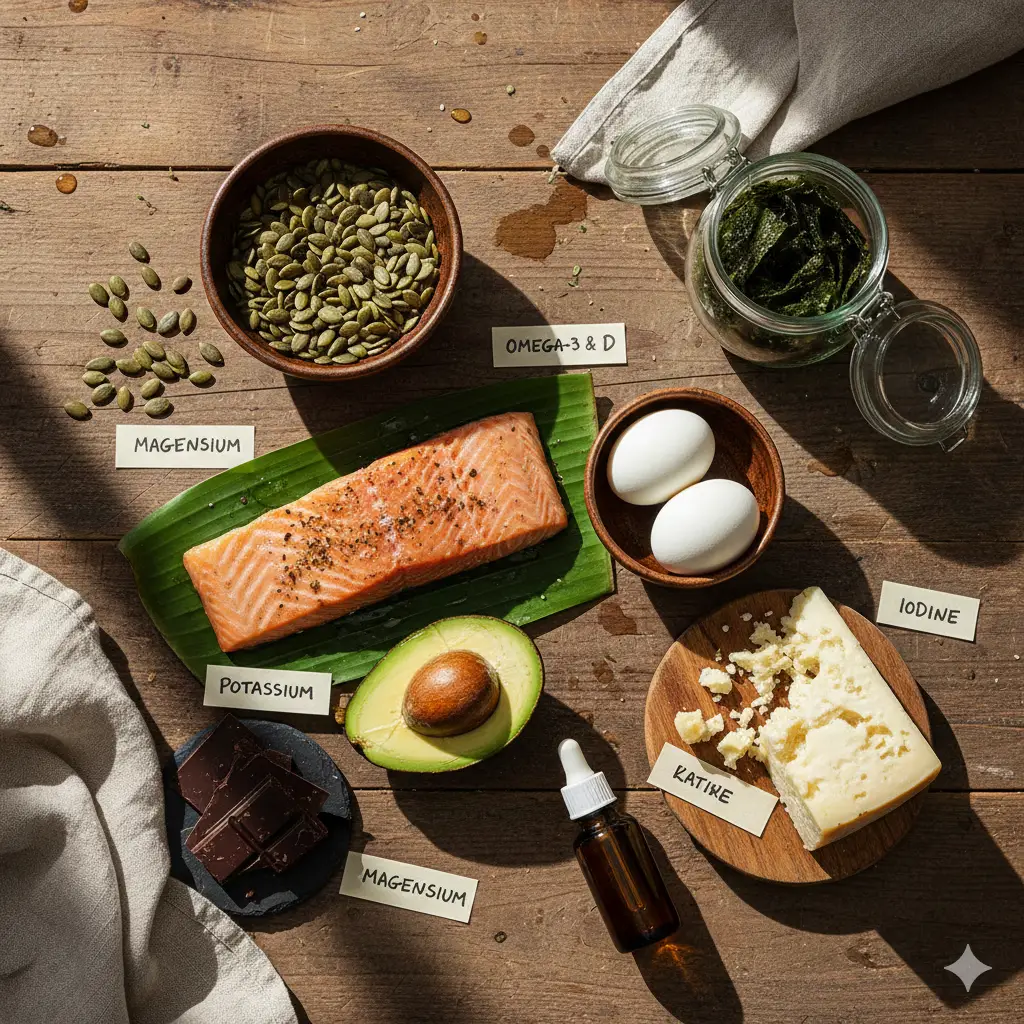
Power Sources: Pumpkin seeds (a small handful is a powerhouse), spinach, black beans, almonds, and dark chocolate (80%+).
-
Pro Tip: Add a handful of spinach to everything—smoothies, eggs, pasta sauce. You won’t taste it, but your cells will thank you.
-
2. Vitamin D: The Sunshine “Hormone” Most of Us are Starving For
It’s a vitamin that acts like a hormone, directing cells throughout your body. It’s vital for immune function, bone health (it’s what lets you absorb calcium), and mood regulation. Unless you live near the equator and spend significant time outdoors with skin exposed, you’re likely part of the global majority with insufficient levels.
-
The Subtle Signs You Might Need More: Low mood, especially in winter (“seasonal blues”), frequent colds or bugs, persistent fatigue, and general muscle aches.
-
The Common Culprit: Indoor lifestyles, sunscreen overuse (which blocks synthesis), and living at higher latitudes.
-
Kitchen Hack, Not Just a Pill:
-
Power Sources: Fatty fish like wild-caught salmon and sardines, fortified dairy or plant milks, and egg yolks.
-
Pro Tip: Get sensible sun exposure. Aim for 10-15 minutes of midday sun on large skin areas (arms, legs) without sunscreen, several times a week. Can’t do that? A high-quality D3+K2 supplement is one of the few most healthcare professionals genuinely recommend getting tested for and supplementing.
-
3. Omega-3 Fatty Acids (Specifically DHA & EPA): The Brain & Inflammation Managers
These aren’t just “fish oils.” They are critical structural components of your brain and cell membranes. They act as powerful anti-inflammatory agents, balancing out the pro-inflammatory omega-6s that dominate our diets (from vegetable oils, processed snacks). The modern ratio is wildly skewed—historically 1:1, now often 20:1 in favor of omega-6.
-
The Subtle Signs You Might Need More: Dry, flaky skin, brittle nails, brain fog, poor memory, and a tendency toward inflammatory conditions like stiff joints.
-
The Common Culprit: Diets low in fatty fish and high in processed foods cooked in seed oils (soybean, canola, sunflower).
-
Kitchen Hack, Not Just a Pill:
-
Power Sources: Wild-caught salmon, mackerel, sardines, anchovies, walnuts, flaxseeds, and chia seeds.
-
Pro Tip: For plant sources (ALA, like in flax), your body is inefficient at converting it to the active forms (EPA/DHA). Grind your flax-seeds fresh to access the oils, and consider an algae-based supplement if you’re plant-based.
-
4. Potassium: The Electrolyte That Offsets Your Sodium Load
This mineral works in a delicate dance with sodium to regulate fluid balance, nerve signals, and muscle contractions. While we’re overloaded with sodium from processed foods, most of us fall short on potassium. It’s like having the accelerator pressed down (sodium) with weak brakes (potassium).
-
The Subtle Signs You Might Need More: Feeling bloated or puffy, high blood pressure, muscle weakness or spasms, and general fatigue.
-
The Common Culprit: Not eating enough whole fruits and vegetables—the primary sources.
-
Kitchen Hack, Not Just a Pill:
-
Power Sources: Avocado (a hero food), sweet potato, spinach, bananas, coconut water, and white beans.
-
Pro Tip: Make avocado a daily staple. Add it to salads, smoothies, or simply eat it with a spoon and salt. One avocado provides nearly 20% of your daily needs.
-
5. Iodine: The Forgotten Thyroid Regulator
Iodine is essential for producing thyroid hormones, which govern your metabolism, temperature, and energy. With the shift away from iodized salt (many use sea salt or Himalayan salt, which contain negligible iodine) and less consumption of iodine-rich foods, deficiency is re-emerging.
-
The Subtle Signs You Might Need More: Unexplained weight gain, feeling cold all the time, dry skin, hair loss, and persistent fatigue.
-
The Common Culprit: Using non-iodized salt and not eating seafood or seaweed.
-
Kitchen Hack, Not Just a Pill:
-
Power Sources: Seaweed (nori, kelp), cod, yogurt, and eggs. Iodized table salt.
-
Pro Tip: Snack on seaweed sheets or sprinkle dulse flakes on soups and salads. If you use pink or sea salt, ensure you’re getting iodine from other dietary sources.
-
6. Choline: The Brain-Building Nutrient You’ve Never Heard Of
Choline is vital for liver function, brain development, nerve communication, and moving fat out of your liver. It was only recognized as an essential nutrient in 1998, so it’s still under the radar. An estimated 90% of Americans don’t get enough.
-
The Subtle Signs You Might Need More: Brain fog, memory issues, low energy, and surprisingly, muscle aches (it’s involved in the membrane of every cell).
-
The Common Culprit: Avoiding egg yolks (the richest source) and organ meats.
-
Kitchen Hack, Not Just a Pill:
-
Power Sources: Egg yolks (rejoice!), liver, salmon, chickpeas, and broccoli.
-
Pro Tip: Eat the whole egg. Two eggs provide over half your daily needs. Don’t fear the yolk—that’s where almost all the nutrients live.
-
7. Vitamin K2: The Calcium Traffic Director
You know about calcium for bones and vitamin D for absorption. But Vitamin K2 is the critical director that tells calcium where to go: into bones and teeth, and away from arteries and soft tissues where it can cause harm (like arterial calcification). It’s almost non-existent in the standard Western diet.
-
The Subtle Signs You Might Need More: Easy bruising, poor dental health, and concerns about bone density or heart health over time.
-
Common Culprit: Not eating fermented foods or animal products from grass-fed sources.
-
Kitchen Hack, Not Just a Pill:
-
Power Sources: Natto (fermented soybeans), aged hard cheeses (like Gouda), grass-fed butter, and liver.
-
Pro Tip: If you can’t stomach natto, try incorporating a high-quality aged cheese or look for a supplement that combines D3 with K2 (MK-7 form).
-
Putting It All Together: A Day on a Plate to Close These Gaps
Let’s move from theory to practice. Here’s what eating for micro-nutrient density actually looks like in a day:
-
Breakfast: 2-egg omelet with spinach and avocado on the side (Choline, Magnesium, Potassium, Healthy Fats).
-
Lunch: Large salad with mixed greens, chickpeas, salmon (canned is fine), pumpkin seeds, and olive oil dressing (Omega-3, Magnesium, Vitamin D, Protein).
-
Dinner: Grass-fed beef liver pâté on whole-grain crackers (once a week), or a stir-fry with broccoli, chicken, and a side of seaweed salad (K2, Iodine, Choline, Potassium).
-
Snack: Full-fat yogurt with berries, or a square of dark chocolate with almonds (Magnesium, Probiotics, Antioxidants).
Your First Step: The “Nutrient Gap” Checklist
Don’t overhaul your entire pantry tonight. Start with awareness.
[ ] Do I eat leafy greens most days?
[ ] Do I have fatty fish at least twice a week?
[ ] Do I use iodized salt or eat seaweed regularly?
[ ] Do I eat the whole egg?
[ ] Do I get midday sun or supplement with D3?
If you checked “no” to three or more, you’ve found your starting point.
Nourishment shouldn’t be a puzzle. It’s about coming back to the foundational wisdom of real food, where every bite builds you up from the inside out. Start by adding one nutrient-rich food this week, and listen to what your body has been trying to tell you.