
You’ve heard the word. Maybe you’ve seen it on supplement bottles, in wellness articles, or from that friend who won’t stop talking about turmeric. “Inflammation” is everywhere these days.
And with good reason.
Chronic, low-grade inflammation is now understood to be a common thread linking most modern diseases: heart disease, diabetes, arthritis, depression, Alzheimer’s, even cancer. It’s not the acute inflammation of a sprained ankle—red, hot, swollen, healing. It’s the silent, smoldering kind that you can’t feel but that slowly damages your tissues over years.
Here’s what most “anti-inflammatory” advice gets wrong: It’s not about one miracle food or avoiding one evil ingredient. It’s about an overall pattern of eating—and living—that turns down the dial on your body’s stress response.
Let’s cut through the hype. What actually is chronic inflammation? How do you know if you have it? And what does the evidence say about reducing it through diet and lifestyle?
Acute vs. Chronic Inflammation: What’s the Difference?
Acute inflammation is your body’s healthy response to injury or infection. You cut your finger. It gets red, warm, swollen. Immune cells rush in, fight off bacteria, clear debris, and begin healing. Within days, it’s gone. This is good inflammation.
Chronic inflammation is when that response doesn’t shut off. Your immune system stays activated—not fighting an invader, but slowly damaging healthy tissue. It’s like a smoke alarm that keeps blaring after the fire is out.
You can’t feel chronic inflammation directly. But over years, it contributes to:
-
Arterial plaque (heart attacks, strokes)
-
Insulin resistance (type 2 diabetes)
-
Joint destruction (rheumatoid arthritis)
-
Brain cell damage (Alzheimer’s, depression)
-
DNA damage (cancer)
-
Persistent fatigue, pain, brain fog
What Causes Chronic Inflammation?
Multiple factors fuel the fire:
Dietary factors:
-
Excess refined sugars and high-fructose corn syrup
-
Refined grains (white flour, white rice)
-
Industrial seed oils (soybean, corn, sunflower, safflower oils)
-
Trans fats (partially hydrogenated oils)
-
Processed meats (high in advanced glycation end products)
-
Excessive alcohol
Lifestyle factors:
-
Physical inactivity
-
Chronic stress (elevated cortisol)
-
Poor sleep
-
Smoking
-
Obesity (fat tissue itself produces inflammatory chemicals)
Environmental factors:
-
Air pollution
-
Chronic infections
-
Gut dysbiosis (imbalanced gut bacteria)
Many of these factors are within your control. That’s the good news.
Signs You Might Have Chronic Inflammation
You can’t test for “inflammation” with a single home test (though doctors can measure markers like CRP, ESR, and cytokines). But you might notice:
-
Persistent fatigue
-
Joint pain or stiffness
-
Skin issues (acne, eczema, psoriasis)
-
Digestive problems (bloating, irregularity)
-
Brain fog, difficulty concentrating
-
Unexplained weight gain or difficulty losing
-
Frequent infections or slow healing
-
Mood issues (anxiety, depression)
If several of these sound familiar, your body might be telling you something.
The Anti-Inflammatory Diet: What the Evidence Shows
No single food will “cure” inflammation. But an overall dietary pattern makes a measurable difference.
The most studied anti-inflammatory diet is the Mediterranean diet—rich in vegetables, fruits, whole grains, legumes, nuts, seeds, fish, and olive oil. Multiple large studies show it reduces inflammatory markers and lowers risk of inflammatory diseases.
Foods to Emphasize
Colorful vegetables and fruits
These provide antioxidants—compounds that neutralize free radicals that trigger inflammation.
-
Berries: Blueberries, strawberries, raspberries (high in anthocyanins)
-
Leafy greens: Spinach, kale, Swiss chard
-
Cruciferous vegetables: Broccoli, cauliflower, Brussels sprouts, cabbage
-
Tomatoes: Rich in lycopene (especially cooked)
-
Bell peppers, citrus, kiwi (vitamin C)
Healthy fats
-
Olive oil (extra virgin): Rich in oleocanthal, which has ibuprofen-like effects
-
Avocados and avocado oil
-
Nuts: Walnuts, almonds, pistachios
-
Seeds: Flaxseed, chia seeds, pumpkin seeds
-
Fatty fish: Salmon, sardines, mackerel, anchovies (omega-3s)
Whole grains and legumes
-
Oats, quinoa, brown rice, barley
-
Lentils, chickpeas, black beans, kidney beans
Herbs and spices
-
Turmeric: Curcumin is a powerful anti-inflammatory (absorb better with black pepper)
-
Ginger: Contains gingerol
-
Garlic: Allicin has anti-inflammatory properties
-
Cinnamon, rosemary, oregano, cloves
Green tea and coffee
Both are rich in polyphenols with anti-inflammatory effects (moderate amounts).
Foods to Limit
Refined sugars and high-fructose corn syrup
Found in soda, candy, pastries, sweetened yogurt, many packaged foods. Sugar spikes insulin and triggers inflammatory pathways.
Refined grains
White bread, white rice, most breakfast cereals, crackers, chips. These are rapidly digested, spiking blood sugar and inflammation.
Industrial seed oils
Soybean, corn, canola, sunflower, safflower, grapeseed oils. High in omega-6 fatty acids, which promote inflammation when out of balance with omega-3s.
Processed and red meats
Bacon, sausage, deli meats, conventional beef. High in saturated fat, advanced glycation end products, and compounds that promote inflammation.
Excessive alcohol
Moderate intake (1 drink/day) may be anti-inflammatory for some; heavy intake is pro-inflammatory.
Trans fats
Partially hydrogenated oils (banned in many countries but still in some processed foods). Avoid entirely.
A Day of Anti-Inflammatory Eating
Breakfast: Oatmeal with walnuts, blueberries, cinnamon, and a drizzle of olive oil (instead of butter). Green tea.
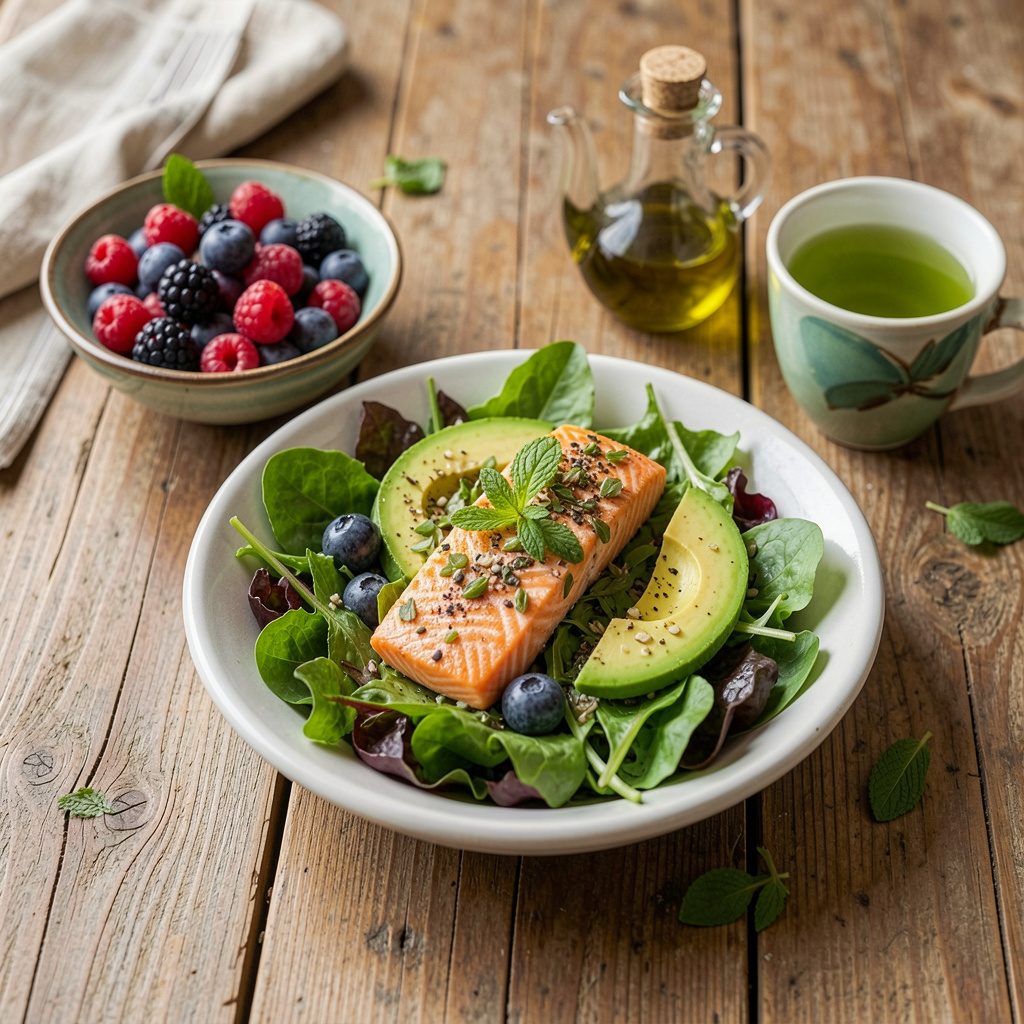
Lunch: Large salad with mixed greens, chickpeas, tomatoes, cucumbers, bell peppers, avocado, and salmon. Dressing: olive oil, lemon juice, garlic, oregano.
Snack: Apple slices with almond butter. Handful of pumpkin seeds.
Dinner: Grilled sardines or salmon over quinoa, with roasted broccoli and sweet potato. Turmeric-ginger tea.
Dessert: Dark chocolate (70%+ cocoa) and fresh berries.
Beyond Diet: Lifestyle Factors That Reduce Inflammation
Exercise
Regular moderate exercise reduces inflammatory markers. Aim for 150 minutes weekly of brisk walking, jogging, cycling, or swimming. Both cardio and strength training help.
Sleep
Chronic sleep deprivation increases inflammatory markers. Aim for 7-9 hours nightly. Consistent schedule matters.
Stress management
Chronic stress keeps cortisol elevated, which promotes inflammation. Meditation, deep breathing, time in nature, therapy, social connection all help.
Weight management
Excess fat—especially visceral (belly) fat—produces inflammatory chemicals. Even modest weight loss reduces inflammation.
Gut health
An imbalanced gut microbiome promotes inflammation. Fiber, fermented foods, and variety feed beneficial bacteria.
Anti-Inflammatory Supplements: Helpful or Hype?
Food first. But some supplements have evidence:
-
Omega-3 fatty acids (fish oil): 1-2 grams EPA/DHA daily reduces inflammation. Best for those who don’t eat fatty fish twice weekly.
-
Curcumin (turmeric extract): Standard turmeric has low absorption; look for formulations with piperine (black pepper) or liposomal delivery. Effective for joint pain and inflammatory conditions.
-
Ginger extract: May reduce inflammation and muscle soreness.
-
Resveratrol: Found in red grapes; limited evidence for supplementation.
-
Vitamin D: If deficient, supplementation reduces inflammation.
What to skip: Expensive “inflammation blends” with proprietary formulas. You don’t know what’s in them or how much.
The Bottom Line
The anti-inflammatory diet isn’t a quick fix or a 30-day cleanse. It’s a sustainable way of eating—abundant in plants, healthy fats, and fish; limited in sugar, refined grains, and processed foods.
You don’t need to be perfect. Small changes add up:
-
Swap one processed snack for an apple and walnuts
-
Replace soda with green tea or water
-
Add a serving of vegetables to every meal
-
Eat fatty fish twice a week
Your body’s inflammatory fire has many fuels. Take away some of them, and the flame burns lower. Your future self—with fewer aches, clearer thinking, and lower disease risk—will thank you.
You can’t eliminate inflammation completely—it’s a necessary part of healing. But you can stop feeding the fire that burns too hot.