
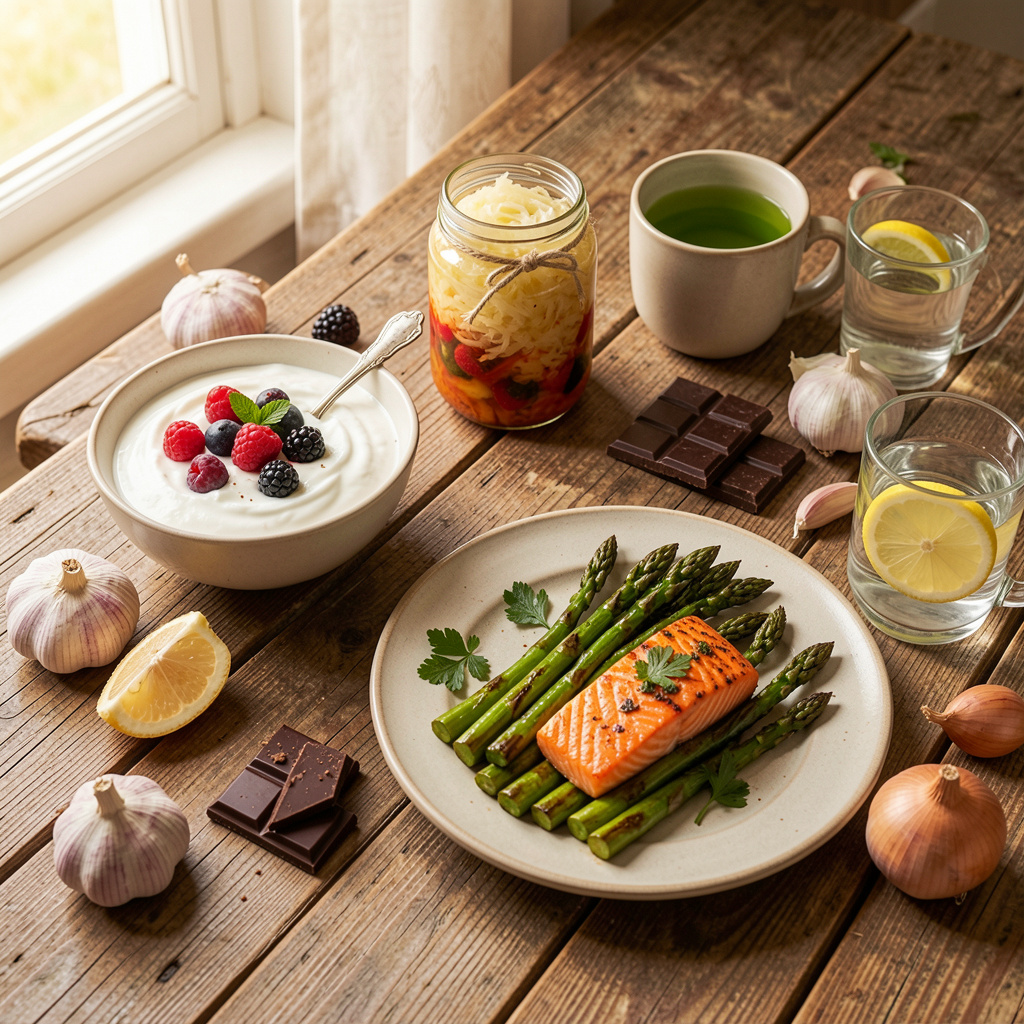
Let me ask you something. Have you ever had a “gut feeling” about something? Felt butterflies before a big presentation? Lost your appetite when stressed?
That’s not just poetry. It’s biology.
Your gut and your brain are in constant conversation. So are your gut and your immune system. Your gut and your skin. Your gut and pretty much every system in your body.
The problem? Most of us spend years abusing this relationship. We feed it processed food, douse it with stress hormones, starve it of fiber, and then wonder why we feel bloated, tired, and off.
Here’s what I’ve learned after years of digestive struggles: Your gut isn’t just where food goes. It’s the command center of your health.
What Is the Gut Microbiome?
Inside your intestines lives a vast community of microorganisms—bacteria, viruses, fungi, and other microbes. Collectively, this is your gut microbiome.
Here’s a number that might shock you: your body contains about 30 trillion human cells… and about 40 trillion bacteria. You’re more microbe than human, at least by cell count.
These microbes aren’t just passengers. They’re active participants in your health:
-
They help digest food your body can’t
-
They produce vitamins (including B vitamins and vitamin K)
-
They train your immune system
-
They produce compounds that affect your brain
-
They protect against harmful pathogens
-
They influence inflammation throughout your body
The balance of good to bad bacteria matters enormously. When that balance tips—too many harmful bugs, not enough beneficial ones—health problems follow.
The Gut-Brain Axis: Why Your Second Brain Matters
There’s a reason your gut is sometimes called your “second brain.” It has its own nervous system—the enteric nervous system—with over 100 million neurons. That’s more neurons than your spinal cord.
Your gut and brain are connected by the vagus nerve, a superhighway of communication running in both directions. Your brain sends signals to your gut (which is why stress upsets your stomach). And your gut sends signals to your brain (which is why gut health affects mood).
What this means for you:
-
Anxiety and depression are linked to gut microbiome composition. Studies show people with depression have different gut bacteria than those without.
-
Stress directly alters gut bacteria. Chronic stress can reduce beneficial bacteria and increase harmful ones.
-
Gut inflammation sends signals to the brain that can contribute to brain fog and low mood.
-
Serotonin, the “feel-good” neurotransmitter, is produced about 95% in your gut, not your brain.
The practical takeaway: Supporting your gut health can support your mental health. This isn’t alternative medicine—it’s emerging neuroscience.
The Gut-Skin Axis: What’s Happening Inside Shows Up Outside
If you’ve ever noticed your skin flaring up after eating certain foods, you’ve experienced the gut-skin connection firsthand.
How they’re connected:
-
Inflammation in the gut can trigger systemic inflammation, which shows up as acne, eczema, or rosacea.
-
Leaky gut (increased intestinal permeability) allows particles to enter your bloodstream that shouldn’t, potentially triggering skin reactions.
-
Nutrient absorption depends on gut health. If you’re not absorbing nutrients, your skin can’t repair itself properly.
-
Gut dysbiosis (imbalanced bacteria) is linked to various skin conditions, including acne, psoriasis, and eczema.
The practical takeaway: Skincare isn’t just about what you put on your skin. It’s about what you put in your body. Topical treatments help, but they can’t fix internal inflammation.
Signs Your Gut Might Be Unhappy
How do you know if your gut needs attention? Here are common signs:
Digestive Symptoms:
-
Bloating and gas after meals
-
Heartburn or acid reflux
-
Constipation or diarrhea
-
Irregular bowel movements
-
Food intolerances developing
Beyond Digestion:
-
Unexplained fatigue
-
Skin issues (acne, eczema, rosacea)
-
Frequent illnesses (your gut houses 70% of your immune system)
-
Sugar cravings (certain bacteria thrive on sugar and can drive cravings)
-
Unintentional weight changes
-
Brain fog or difficulty concentrating
-
Mood swings, anxiety, or depression
-
Autoimmune conditions
If several of these sound familiar, your gut might be trying to tell you something.
Probiotics vs. Prebiotics: What’s the Difference?
This confusion is incredibly common. Let’s settle it.
Probiotics
What they are: Live beneficial bacteria that add to the population of good microbes in your gut.
Food sources:
-
Yogurt (with live active cultures)
-
Kefir
-
Sauerkraut (unpasteurized)
-
Kimchi
-
Kombucha
-
Miso
-
Tempeh
-
Certain aged cheeses
Supplement forms: Various strains including Lactobacillus, Bifidobacterium, and Saccharomyces boulardii.
Prebiotics
What they are: Types of fiber that feed your beneficial bacteria. Think of them as fertilizer for your gut garden.
Food sources:
-
Garlic
-
Onions
-
Leeks
-
Asparagus
-
Jerusalem artichokes
-
Bananas (especially slightly green)
-
Oats
-
Apples
-
Flaxseeds
-
Cocoa
Synbiotics
Some foods and supplements combine probiotics and prebiotics. These are called synbiotics.
The key: You need both. Probiotics introduce beneficial bacteria; prebiotics feed them so they can thrive and multiply.
The Gut-Healing Diet: What to Eat
You don’t need a complicated protocol. Focus on adding these foods:
1. Fiber-Rich Foods
Fiber is prebiotic. It feeds your good bacteria. Most adults get far too little—around 15 grams daily when we need 25-35 grams.
Add: Vegetables, fruits, legumes, whole grains, nuts, seeds.
2. Fermented Foods
These introduce beneficial bacteria naturally.
Add: Yogurt, kefir, sauerkraut, kimchi, kombucha, miso, tempeh.
3. Polyphenol-Rich Foods
Polyphenols are plant compounds that feed beneficial bacteria.
Add: Berries, dark chocolate, green tea, coffee, red wine (in moderation), olives, herbs and spices.
4. Omega-3 Fatty Acids
These reduce inflammation, including in the gut.
Add: Fatty fish (salmon, sardines), walnuts, flaxseeds, chia seeds.
5. Bone Broth and Collagen
These provide amino acids that support gut lining repair.
Add: Bone broth, collagen supplements, gelatin.
What to Limit for Gut Health
1. Highly Processed Foods
Emulsifiers, artificial sweeteners, and preservatives in processed foods can disrupt gut bacteria.
Reduce: Packaged snacks, processed meats, sugary cereals, fast food.
2. Excess Sugar
Sugar feeds harmful bacteria and yeast, potentially allowing them to overgrow.
Reduce: Added sugars, sugary drinks, sweets.
3. Artificial Sweeteners
Some studies suggest artificial sweeteners like aspartame and sucralose may negatively alter gut bacteria.
Reduce: Diet sodas, sugar-free products with artificial sweeteners.
4. Excessive Alcohol
Alcohol can irritate the gut lining and disrupt bacterial balance.
Reduce: Heavy drinking; moderate intake may be fine for some people.
5. Unnecessary Antibiotics
Antibiotics kill bacteria—including beneficial ones. They’re lifesaving when needed but overused.
Reduce: Asking for antibiotics for viral infections; use only when prescribed and necessary.
Lifestyle Factors That Affect Gut Health
Stress Management
Chronic stress alters gut bacteria, increases intestinal permeability, and can trigger digestive symptoms.
What helps: Meditation, deep breathing, adequate sleep, therapy, time in nature.
Sleep
Your gut bacteria have circadian rhythms too. Disrupted sleep affects their balance.
What helps: Consistent sleep schedule, 7-9 hours nightly, good sleep hygiene.
Exercise
Regular physical activity increases beneficial gut bacteria diversity.
What helps: Consistent movement—anything you enjoy and will stick with.
Hydration
Water supports digestion and helps maintain gut lining health.
What helps: Adequate fluids throughout the day.
Common Gut Health Questions
“Do I need a probiotic supplement?”
It depends. Food sources are generally preferred, but supplements can help in specific situations:
-
After antibiotics
-
For certain digestive conditions
-
When you can’t tolerate fermented foods
-
For targeted strains addressing specific concerns
If you supplement, choose a high-quality product with third-party testing and specific strains matched to your needs.
“What is leaky gut?”
Leaky gut (increased intestinal permeability) refers to gaps forming in the intestinal barrier, allowing particles to pass into the bloodstream that shouldn’t. It’s a real phenomenon, though some practitioners overuse it as a diagnosis.
Causes include chronic stress, poor diet, excessive alcohol, and certain medications. Supporting gut health generally helps tighten these junctions.
“How long does it take to improve gut health?”
Some changes happen quickly—within days of dietary shifts. Others take weeks or months. Consistency matters more than perfection.
“Can gut health help with autoimmune disease?”
Emerging research suggests gut health plays a role in autoimmune conditions. Many autoimmune patients find symptom improvement with gut-supporting diets. Work with a healthcare provider familiar with this connection.
A Sample Gut-Healthy Day
Breakfast: Greek yogurt with berries, a sprinkle of flaxseeds, and a drizzle of honey.
Lunch: Big salad with mixed greens, grilled chicken, avocado, sauerkraut, and olive oil dressing.
Snack: Apple with almond butter, or a small serving of kombucha.
Dinner: Salmon with roasted asparagus and quinoa.
Dessert: A few squares of dark chocolate (70%+).
Beverages: Water throughout the day, green tea, herbal tea.
When to See a Doctor
While many gut issues improve with lifestyle changes, some need medical attention. See a healthcare provider if you experience:
-
Blood in stool
-
Unexplained weight loss
-
Severe or persistent abdominal pain
-
Chronic diarrhea or constipation
-
Difficulty swallowing
-
Family history of colon cancer (for screening guidance)
A gastroenterologist can evaluate for conditions like IBS, IBD, celiac disease, and others that need specific treatment.
The Bottom Line
Your gut isn’t just a digestive tube. It’s a complex ecosystem that influences your mood, immunity, skin, and overall health. When it thrives, you thrive.
You don’t need a complicated protocol. Eat real food, mostly plants, with plenty of fiber and fermented options. Manage stress. Sleep well. Move your body. Your gut bacteria will thank you—and so will every other part of you.
As Hippocrates supposedly said thousands of years ago: “All disease begins in the gut.” Modern science is proving him right.